
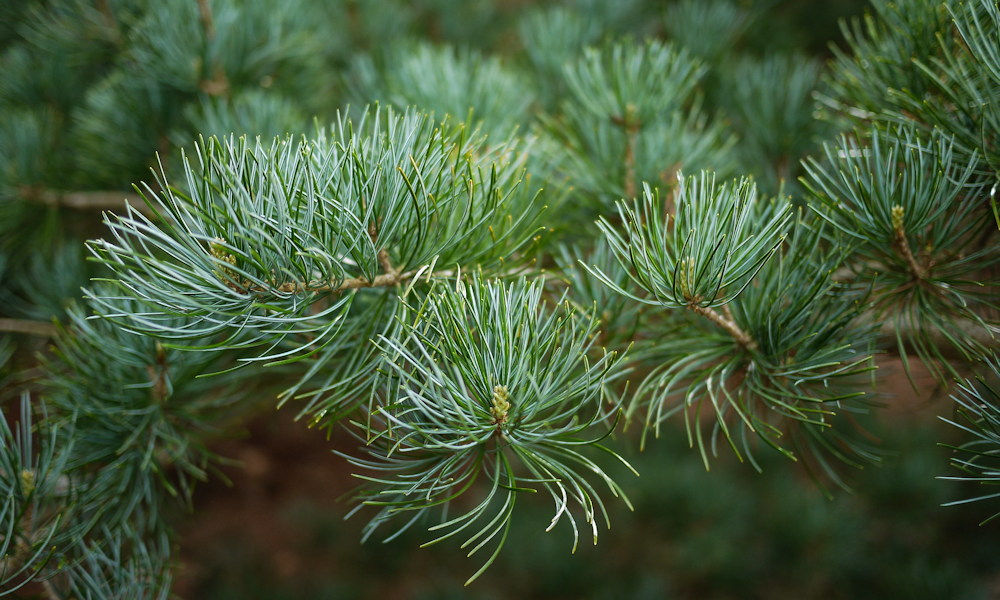

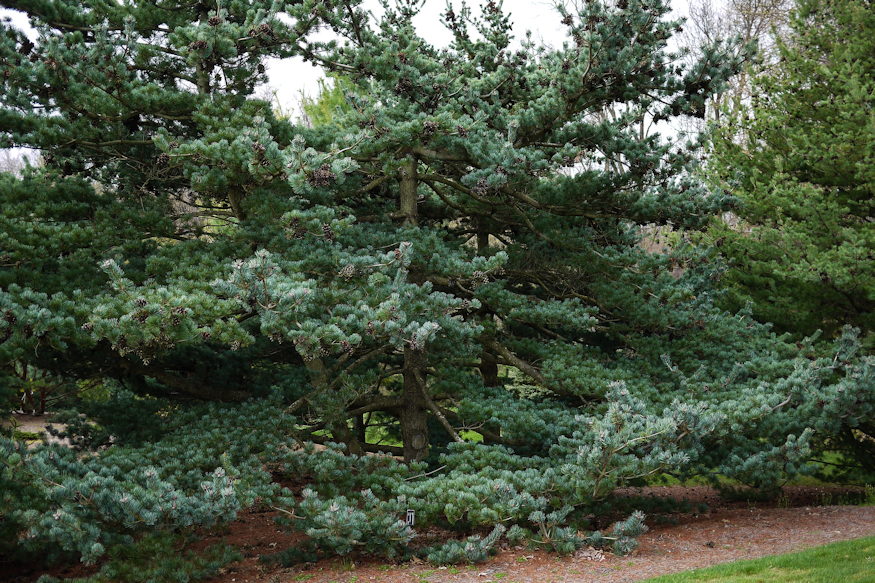
Some trees grow fast, provide quick shade and quietly fade into the background. Japanese white pine (Pinus parviflora ‘Glauca’) does the opposite. It does not rush, it does not adapt hastily, and it does not try to please everyone. In return, it brings character, calm and a sense of permanence to the garden.
Native to Mountain Landscapes
Pinus parviflora is native to the mountainous regions of Japan and Korea. In the wild, it grows on exposed slopes with well-drained soils, cool winters and challenging conditions. It is a tree shaped by endurance rather than speed.
This origin still defines its role in gardens today: Japanese white pine rewards patience, not urgency.
A Brief Botanical History
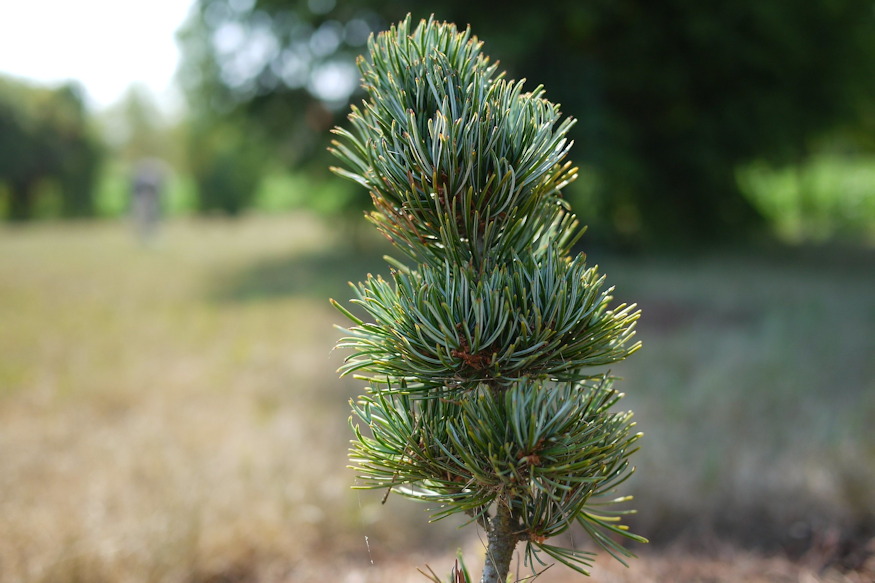
In Japan, white pine has long held cultural significance and is one of the most valued species in bonsai cultivation. Its fine needles, balanced branching and slow growth make it ideal for shaping over decades. The cultivar ‘Glauca’ is especially prized for its silvery-blue needle colour.
The species reached Europe in the 19th century, first appearing in botanical collections before finding its way into specialist gardens.
Relatives and Garden Companions
Japanese white pine belongs to the pine family (Pinaceae). Its relatives include Scots pine, spruces and larches, although Pinus parviflora is notably slower-growing and more refined in appearance.
In garden design, it pairs well with other slow-growing conifers, ornamental grasses and rock garden plants, where it serves as a focal point rather than a competitor.
Care – Less Is More
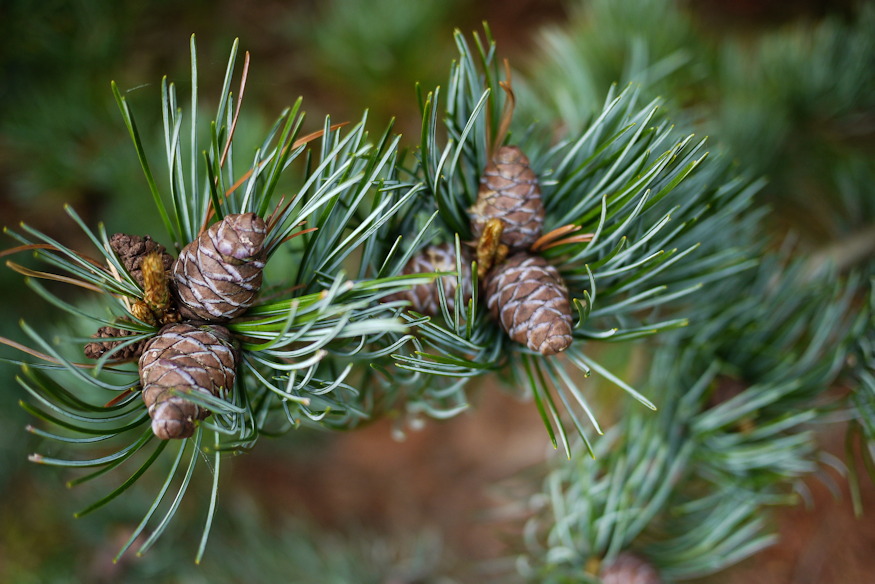
Pinus parviflora ‘Glauca’ thrives in full sun to light shade. Excellent drainage is essential: the tree dislikes waterlogged soil but tolerates dry periods once established.
Its nutrient requirements are modest. Excessive fertilisation encourages soft, elongated growth that detracts from its natural form and long-term stability.
Pruning and Shaping
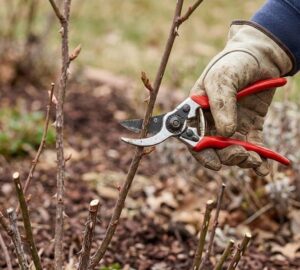
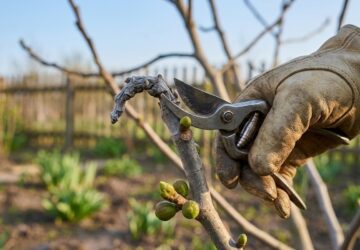
Japanese white pine does not require traditional pruning. Growth is managed by selectively reducing spring candles, a technique that controls size while preserving structure.
This restrained response to pruning is one reason the species is so highly valued in bonsai culture.
Propagation – Slow, but Reliable
Propagation is usually done by grafting, as seed-grown plants do not reliably retain cultivar characteristics. Nursery-grown specimens are therefore typically grafted plants.
A Common Misunderstanding – Why Doesn’t It Grow?
Many gardeners become concerned when Japanese white pine shows very little visible growth year after year. This is not a problem but a feature of the species. Its development focuses on density, needle quality and structure rather than height.
Overwatering and overfeeding are far more likely to cause problems than neglect.
Who Is Japanese White Pine For?
This tree is best suited to gardeners who think in decades rather than seasons. It works beautifully in smaller gardens, front yards and minimalist or Japanese-inspired designs.
It is not ideal for those seeking rapid growth or instant impact, but for anyone who appreciates quiet strength, refined form and plants that age gracefully, Japanese white pine is a deeply rewarding choice.
All photos by F. D. Richards