
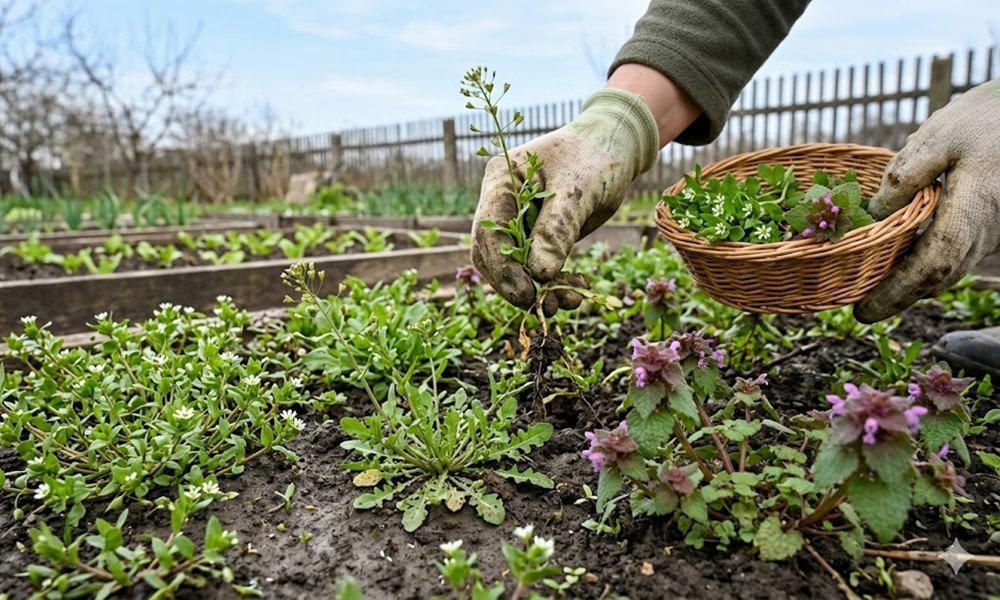

In late winter, certain plants resume growth long before cultivated crops. These species are commonly labeled as weeds — yet the term reflects human intention rather than botanical classification.
What Defines a Weed?
A weed is simply a plant growing where it is not desired. The same species may be problematic in a vegetable bed yet beneficial in a pollinator strip. Understanding this relativity reshapes management decisions.
Common Late-Winter Species
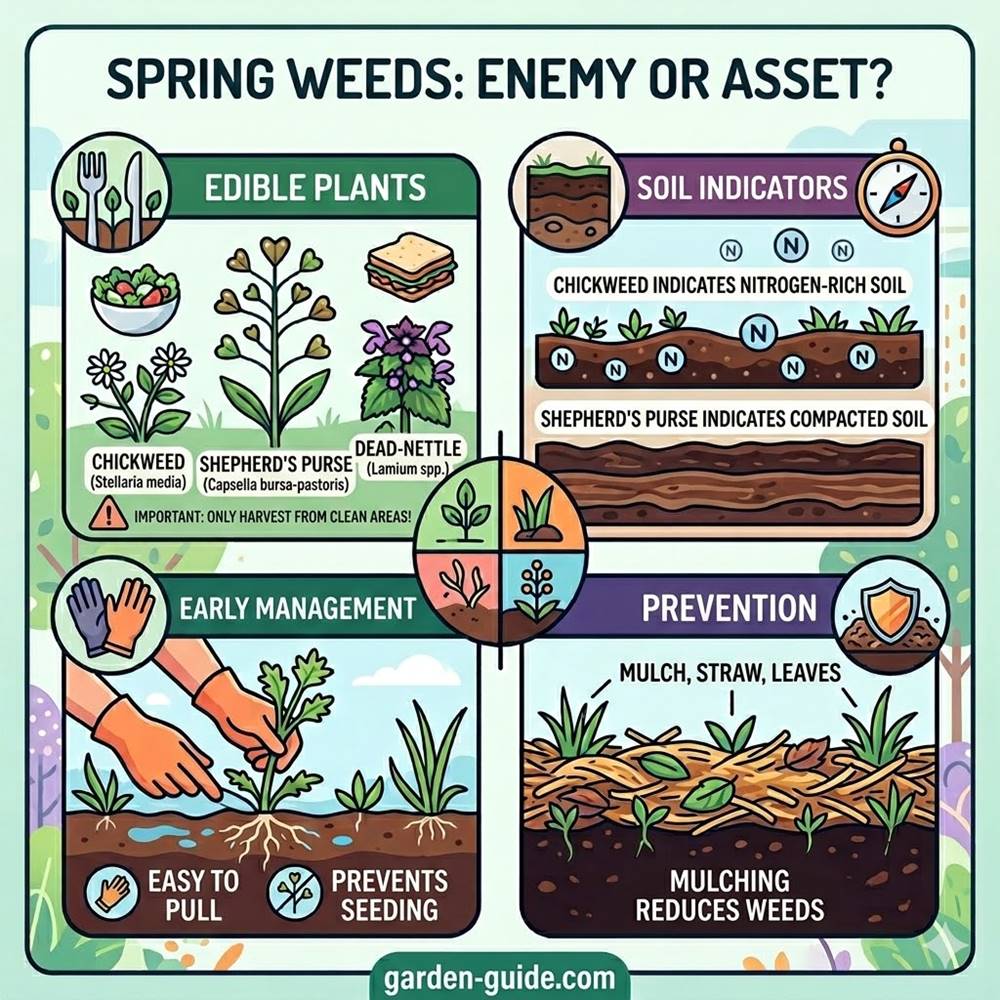
Chickweed (Stellaria media), shepherd’s purse (Capsella bursa-pastoris), dead-nettle (Lamium spp.), and speedwell (Veronica spp.) are typical winter annuals. Having germinated in autumn, they exploit early-season light and moisture.
Why Act Early?
Young plants possess shallow root systems and are easily removed from moist soil. Delayed control allows flowering and seed production, increasing future pressure.
Edible Possibilities
Several early weeds are edible when correctly identified and harvested from untreated areas.
- Chickweed offers tender leaves suitable for salads and rich in vitamin C.
- Shepherd’s purse provides a mild, mustard-like flavor.
- Dead-nettle flowers and young leaves are edible and non-stinging.
Accurate identification and clean harvesting conditions remain essential.
When Removal Is Necessary
In productive beds, weeds compete for nutrients, light, and water. Timely removal prevents yield reduction.
Mulching as Prevention
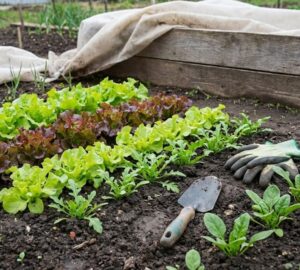
Organic mulches suppress germination by limiting light exposure and stabilizing soil moisture.
Indicator Value
Certain weeds reflect soil conditions. Chickweed often indicates nitrogen-rich soil, while shepherd’s purse may signal compaction.
Viewing early weeds solely as adversaries overlooks their ecological and nutritional dimensions. Effective management balances control with understanding. Late winter weeds are not merely intruders — they are signals, resources, and reminders that life resumes before the official start of spring.