
In early spring, ornamental shrubs may appear uncertain. External appearance does not always reflect internal vitality. Careful assessment precedes pruning. The primary objective is evaluation, not immediate reshaping.
Identifying Frost Damage
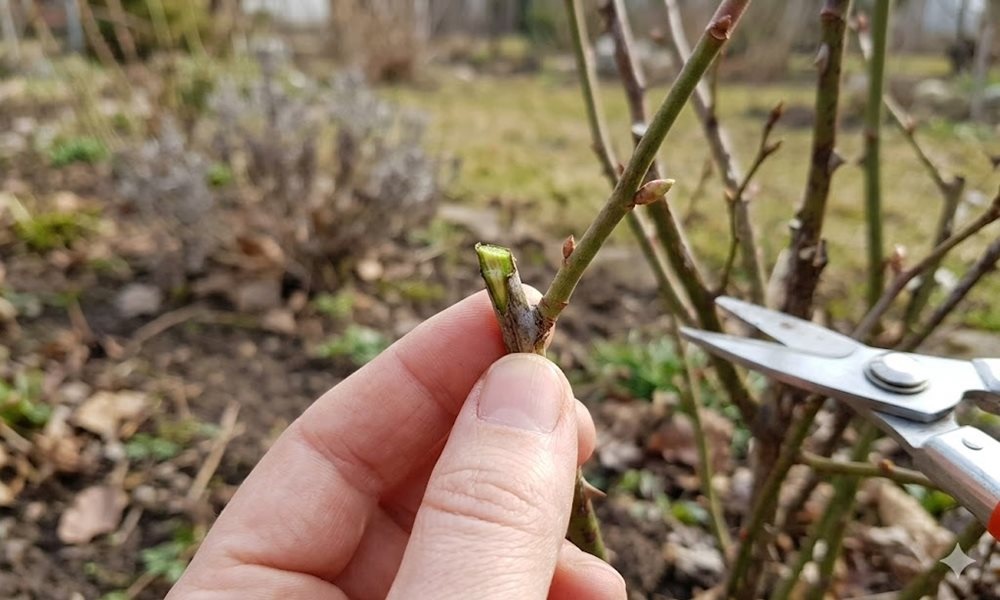
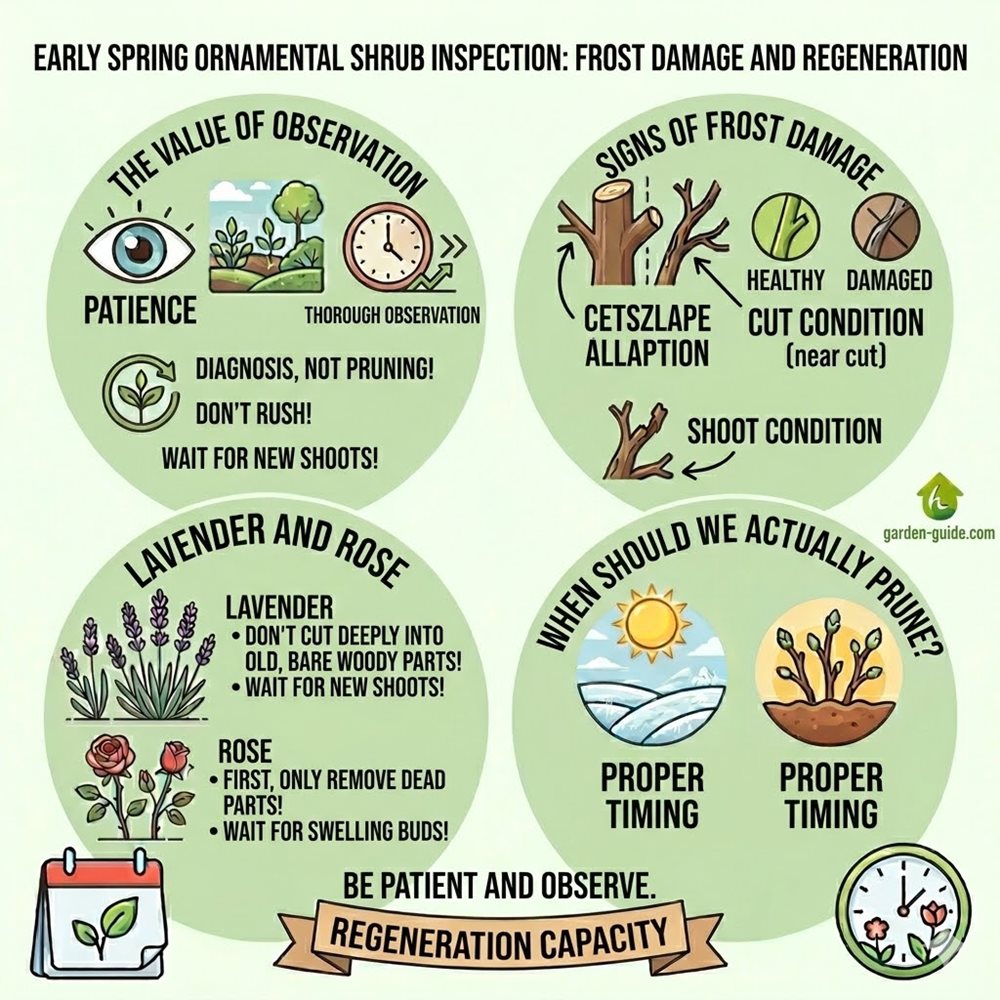
Cutting a thin shoot reveals internal tissue color. Green or cream-colored tissue indicates vitality, while brown discoloration suggests damage. Frost often affects only shoot tips rather than entire plants.
Lavender Assessment
Lavender tolerates moderate frost but suffers under prolonged cold and wet conditions. Pruning should be delayed until new growth becomes visible. Cutting into old woody sections without green shoots reduces recovery potential.
Initial Rose Inspection
Rose canes showing brown internal tissue or shriveled bark are likely damaged. Remove clearly dead wood first, delaying structural pruning until bud swelling becomes consistent. Pruning too early may expose new growth to late frost injury.
Timing of Final Pruning
Full pruning is best performed when frost risk declines and buds show active swelling. Gradual intervention reduces stress and enhances recovery.
Observational Approach
Patience during early spring inspection supports better long-term structure and flowering performance. Effective management begins with diagnosis rather than immediate action.