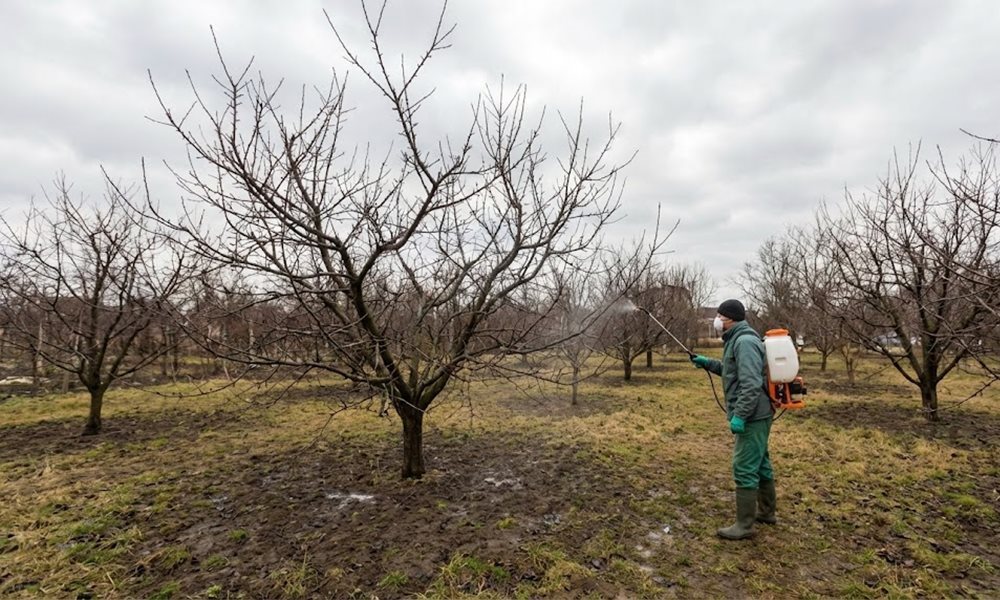

Pre-bud-break spraying is a preventive sanitation measure designed to reduce overwintering pathogen and pest populations before active growth begins. Proper timing and material choice determine its effectiveness.
What Does “Before Bud Break” Mean?
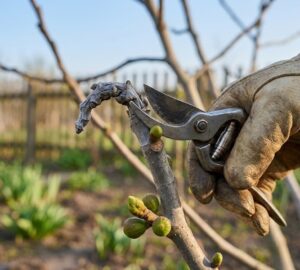
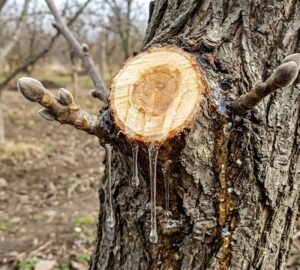
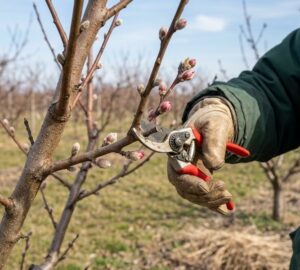
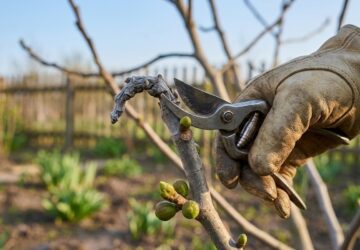
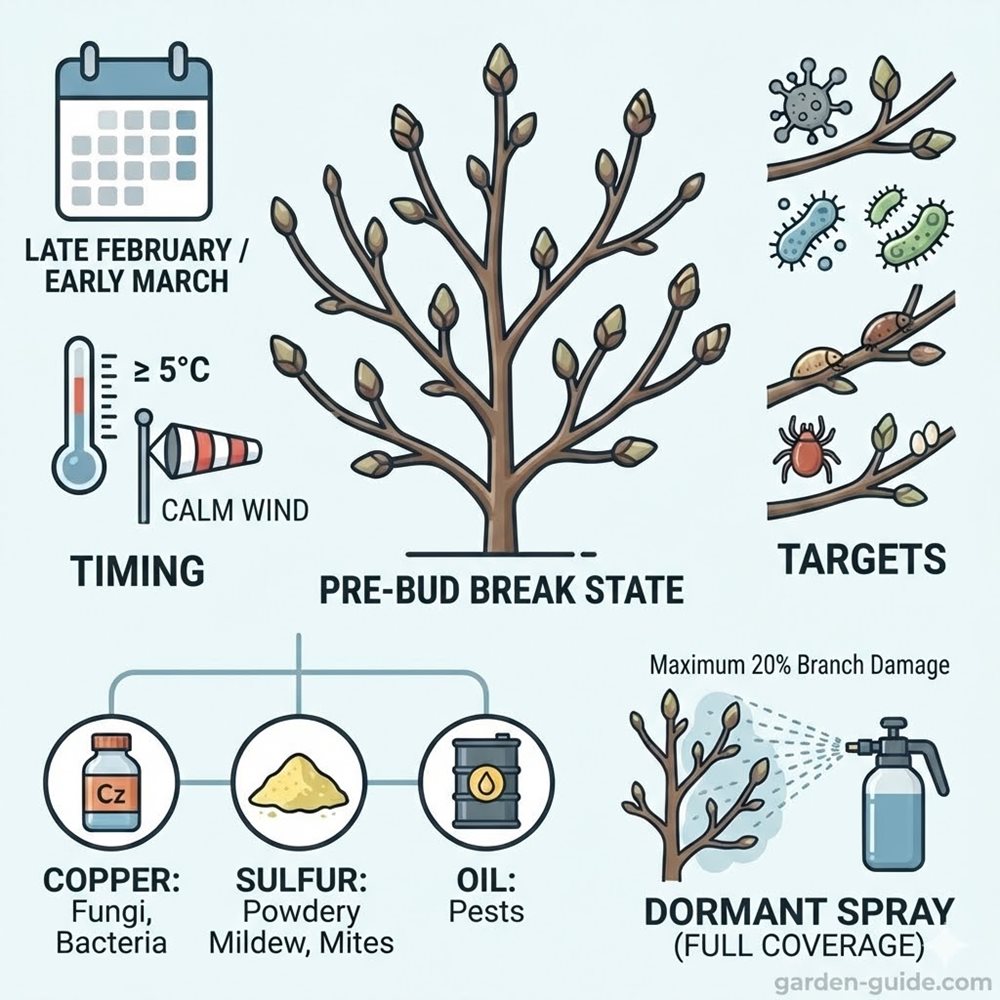
It refers to a phenological stage rather than a calendar date. Buds remain closed or slightly swollen, with no visible green tissue. Once green tips appear, certain materials — especially copper — may cause phytotoxicity. Regular inspection of bud development is therefore essential.
Target Organisms
Dormant spraying aims to reduce:
- Fungal pathogens such as apple scab and peach leaf curl
- Certain bacterial diseases
- Overwintering insects including aphids, mites, and scale insects
The goal is suppression, not sterilization.
Recommended Materials
Copper-based products
Effective against many fungal and bacterial pathogens. Particularly valuable in peach orchards prone to leaf curl. Application must occur before green tissue emergence to avoid injury.
Sulfur formulations
Useful primarily against powdery mildew and with partial miticidal effects. Performance improves in mild temperatures.
Horticultural oils (paraffin or plant-based oils)
Act physically by coating and suffocating overwintering insects and eggs. Highly effective against scale and mite populations.
Combination products (copper + oil or sulfur + oil) provide broader-spectrum control.
Environmental Conditions for Application
Daytime temperatures above 5 °C, frost-free conditions for at least 24 hours post-application, calm wind, and dry weather ensure optimal coverage and efficacy.
Spray solution must thoroughly cover branches, trunks, and crevices. Dormant spraying requires complete surface wetting.
Is It Always Necessary?
In orchards with prior disease pressure, strongly recommended. In well-managed gardens, it remains a valuable preventive tool that may reduce the need for repeated in-season treatments.
Dormant spraying is not dramatic work, but it is foundational. It quietly sets the stage for a healthier, more resilient growing season.