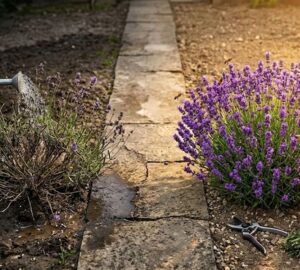


Lavender often looks untidy by early spring. The base becomes woody and bare, the upper shoots uneven and partially lignified. It is tempting to assume that a drastic cut will “reset” the plant and stimulate vigorous new growth.
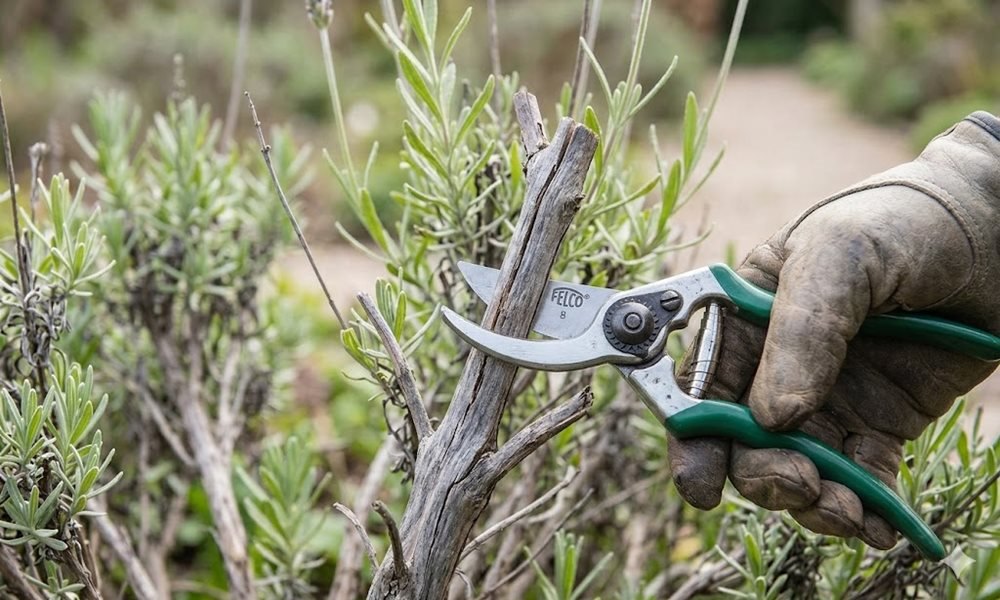
But lavender is not a shrub that reliably regenerates from old wood. When you cut deeply into mature, leafless, woody stems where no visible green shoots or buds remain, the plant’s capacity to resprout is limited. Unlike roses or some deciduous shrubs, lavender does not consistently break from completely dormant old wood.
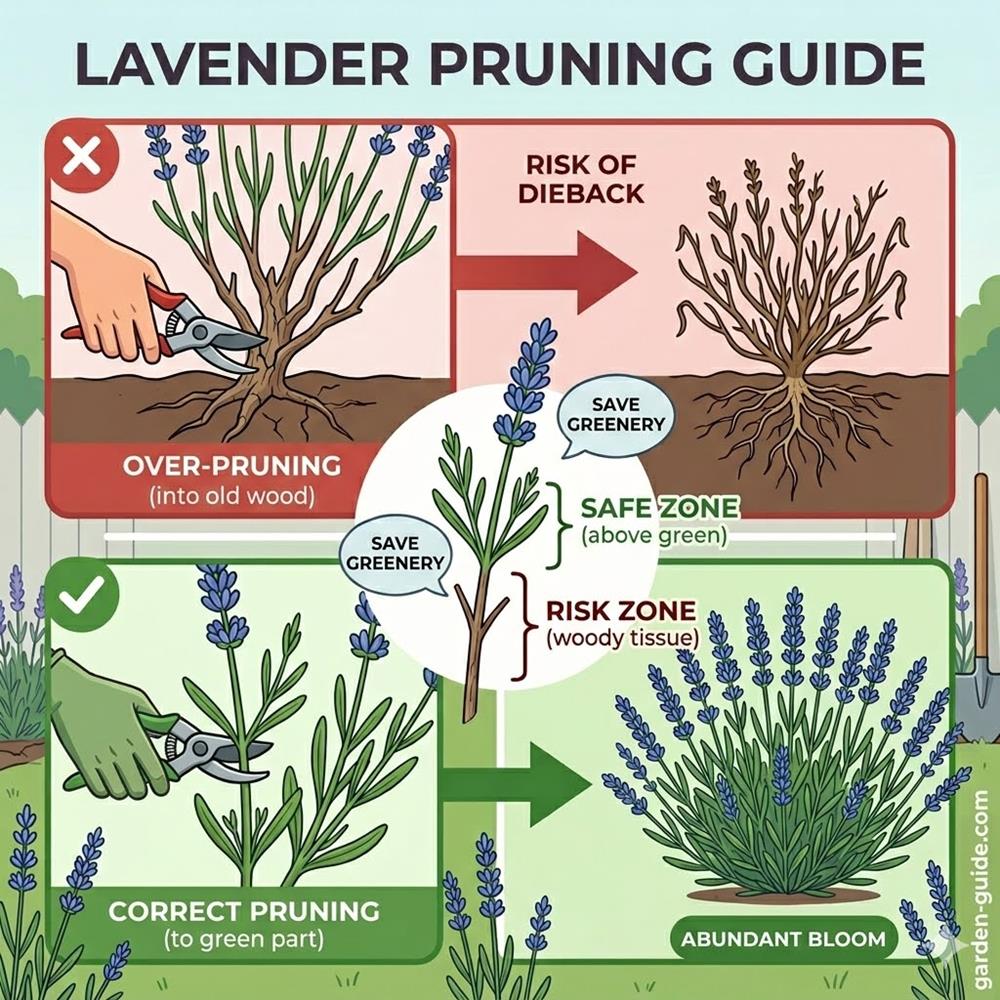
Why Cutting Into Bare Wood Is So Risky
Lavender (Lavandula angustifolia and related species) is a subshrub. Over time, its lower stems become woody while new shoots emerge mainly from younger, partially woody growth. The oldest grey, cracked, fully lignified sections frequently lack viable dormant buds. If pruning cuts reach these zones, several outcomes are possible:
- no new shoots emerge,
- entire branches dry out,
- the plant declines unevenly,
- long-term vigor is reduced.
Deep pruning in such areas is not rejuvenation — it is a gamble.
Can Lavender Recover After Severe Pruning?
Recovery is possible, but not guaranteed. If hidden viable buds remain within the woody tissue, or if young shoots are present near the base, regrowth may occur. However, regeneration is typically slow. The plant may lose an entire flowering season because energy is redirected toward vegetative recovery rather than bloom production.
Lavender flowers on relatively young growth. After extreme pruning, the plant must rebuild structure before it can flower abundantly again.
How to Identify the “Safe Zone” Before Cutting
Before pruning, inspect stems carefully:
- Is there a green layer beneath the bark when lightly scratched?
- Does the stem feel flexible rather than brittle?
- Are small buds visible near nodes or branch junctions?
If green tissue is present, pruning is safer. If stems are grey, hard, brittle, and entirely lifeless, cutting back to that point may permanently remove that branch’s ability to regenerate.
As a rule, always leave some green growth below your pruning cut.
What Happens Physiologically After Deep Pruning?
Severe pruning removes much of the plant’s photosynthetic capacity. In early spring especially, stored carbohydrates in the roots are limited after winter dormancy. If too much top growth is removed, the plant must rely heavily on these reserves to push new shoots. If reserves are insufficient, partial dieback or complete plant failure may follow. Even when regrowth occurs, plants may exhibit weaker structure, delayed flowering, or reduced resilience to drought and heat later in the season.
Lavender, being Mediterranean in origin, evolved under conditions favoring gradual shaping rather than abrupt, extreme reduction.
When Is Stronger Pruning Justified?
More intensive reduction may be considered when:
- the plant is young (2–3 years old),
- woody tissue is not yet fully aged,
- visible green shoots exist near the base,
- structural imbalance requires correction.
In older, heavily lignified plants with extensive bare wood, gradual rejuvenation over multiple seasons — or eventual replacement — is often the more reliable strategy.
Prevention Is Better Than Radical Correction
The healthiest lavender plants are those pruned consistently and moderately each year.
- Trim back green shoots after flowering.
- Lightly shape in autumn.
- In spring, remove only winter damage and cut back to green tissue.
Regular maintenance prevents excessive woody buildup and preserves long-term vitality.
Cutting lavender back into bare wood is not a guaranteed shortcut to renewal — it is a high-risk intervention that often leads to disappointment.