
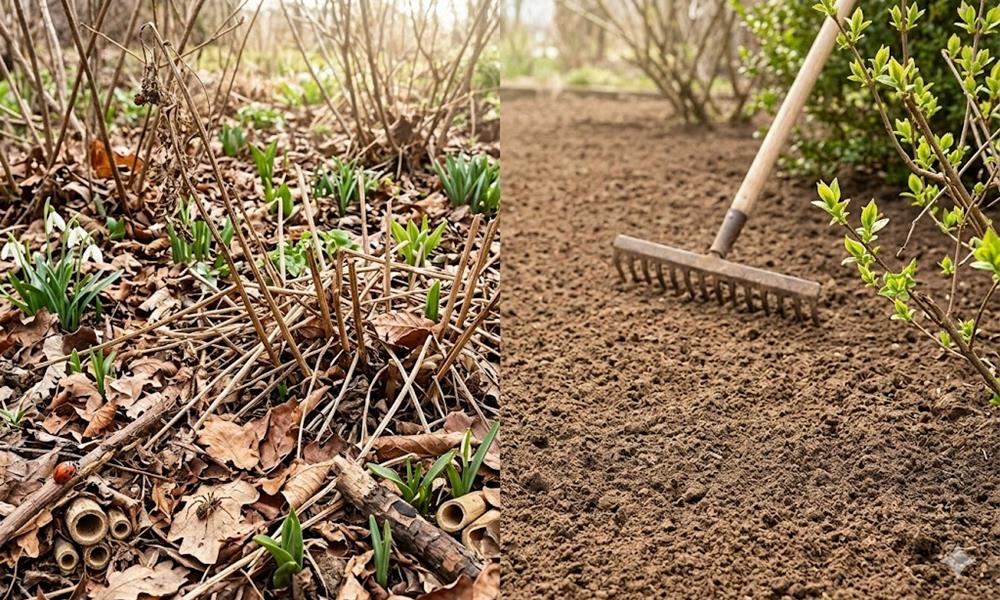

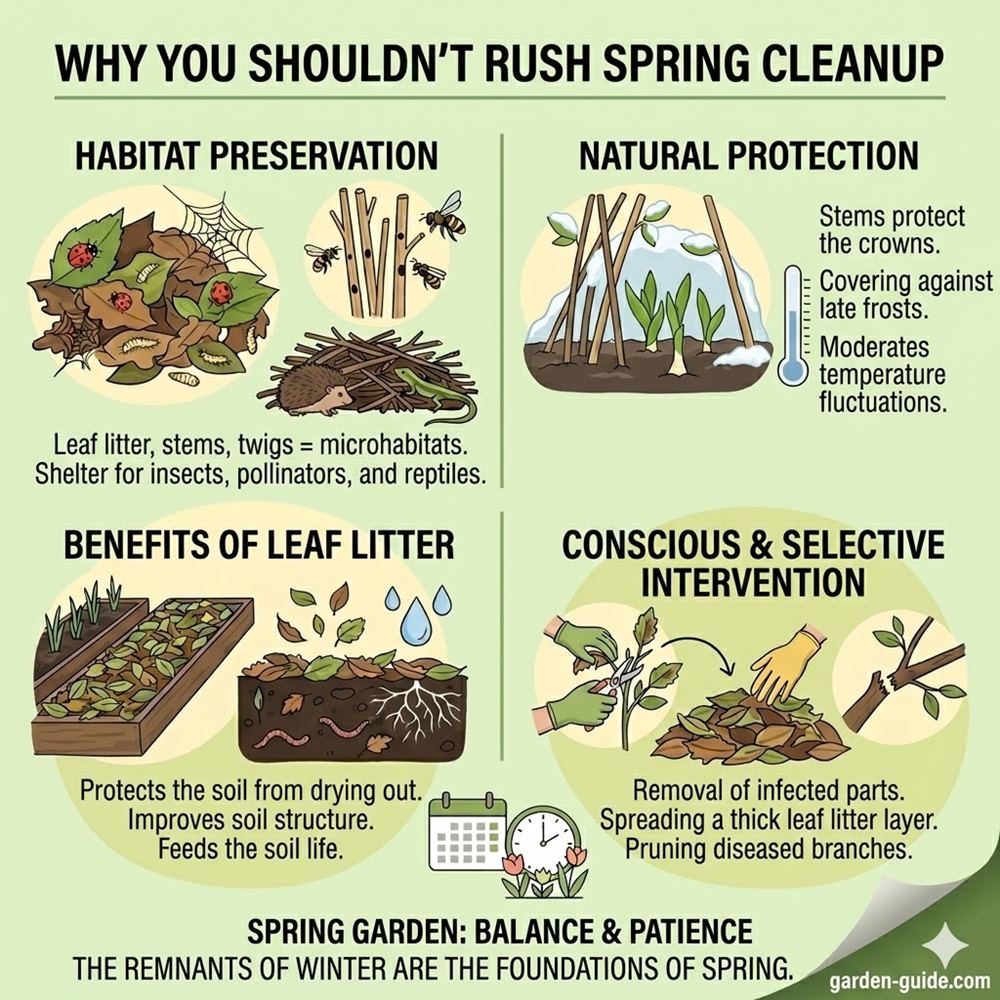
The first warm days of early spring often trigger an urge for thorough garden cleanup. Leaves are removed, perennial stems cut back, and surfaces cleared to create visual order. However, what appears as debris frequently functions as habitat. Leaf litter shelters overwintering insects, dried stems house solitary bees, and small brush piles provide refuge for hedgehogs and amphibians. Removing all organic material simultaneously may reduce biodiversity at a critical transition period.
Ecological Value of Structural Diversity
Standing stems and partial ground cover moderate soil temperature fluctuations and protect emerging shoots. Leaf litter supports soil organisms and improves structure over time. Selective intervention rather than total removal preserves ecological balance.
Aesthetic Expectations Versus Biological Function
Modern garden aesthetics often favor clean, open spaces. Ecological resilience, however, relies on structural variation and protected microhabitats. Balancing order with biodiversity strengthens long-term stability.
When Cleanup Is Justified
Removal of diseased plant material, excessive thatch, or hazardous branches remains necessary. The goal is strategic, not comprehensive, intervention.
Patience as a Management Tool
Delaying full-scale cleanup by a few weeks allows overwintering organisms to complete their life cycles and relocate naturally.
Spring success depends less on immediate tidiness and more on synchronizing actions with ecological processes. A garden thrives not because it is instantly cleared, but because it retains the subtle structures that sustain life beyond the visible surface.