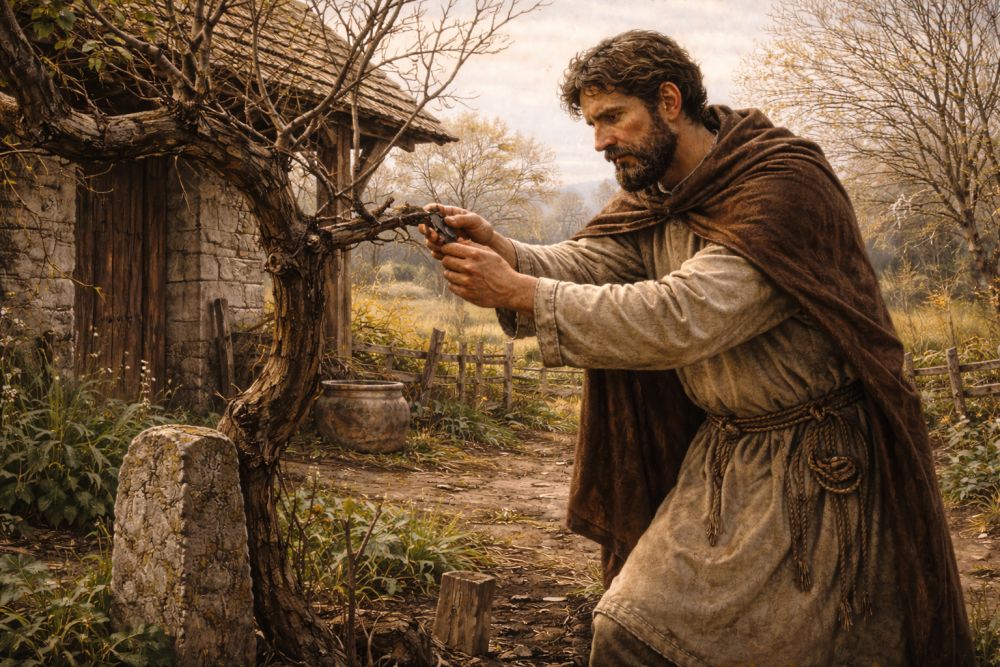

February 23 once marked the Roman festival of Terminalia, dedicated to Terminus, guardian of boundaries. Landowners decorated boundary stones and reaffirmed property lines — not only as legal markers, but as symbols of order and stewardship.
Terminalia and the Meaning of Limits
Boundaries defined responsibility. Knowing where one field ended and another began ensured peace, productivity, and mutual respect. In gardening, borders still matter: bed edges, orchard rows, drainage lines, hedges.
Late February is an ideal time to reassess structure before the rush of spring growth begins.
Serenus the Gardener
February 23 is also linked to Saint Serenus the Gardener, a 4th-century martyr remembered in tradition as a humble worker tending a Roman garden. According to early accounts, he lived simply, cultivating plants and maintaining order in the grounds entrusted to him, when persecution brought his life to an end.
Serenus stands out among saints for his ordinary vocation. He was neither bishop nor scholar, but a gardener — someone whose daily work involved soil, pruning, watering, and care. His story ties spiritual discipline to horticultural discipline: patience, attentiveness, and respect for living things.
In seasonal terms, Serenus represents watchfulness. Late winter gardening is less about visible growth and more about preparation — marking branches for pruning, assessing soil moisture, planning beds before spring’s rapid expansion begins.
A Seasonal Threshold
Across much of Europe, February 23 stands at the edge of change. Hazel (Corylus avellana) releases pollen, hellebores bloom, and willow buds swell. Yet frost may still return overnight.
The boundary between seasons is rarely a sharp line; it is a gradual crossing.
February 23 reminds us that stewardship begins with knowing where things stand — in soil, in weather, and in time.