
Mid-February marks a quiet but decisive shift. The daylight has increased significantly since the winter solstice, and although frost may still visit, the balance is tipping.
The First Pollen in the Air
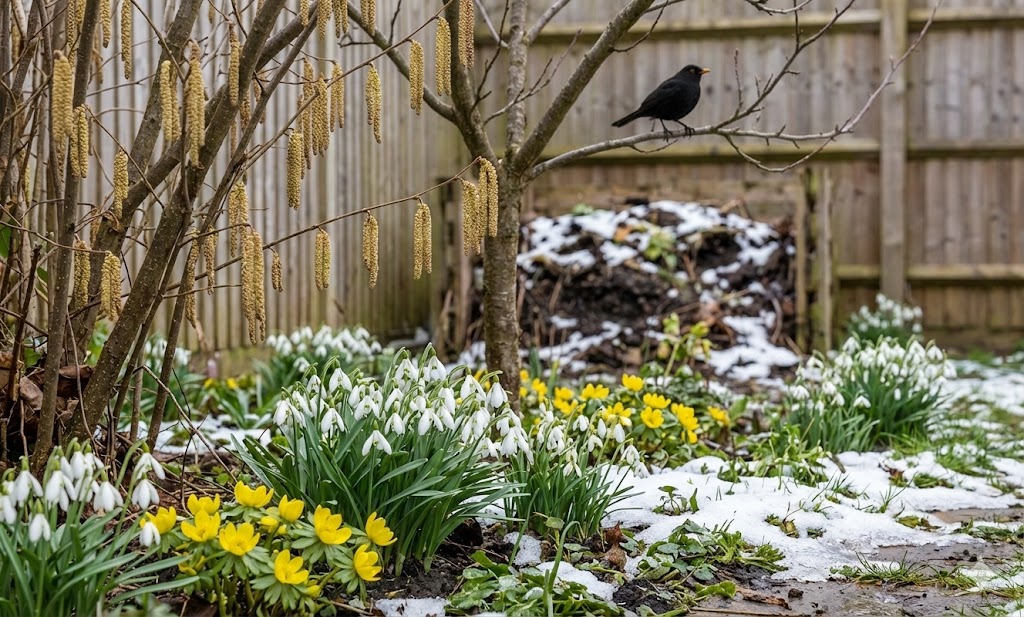
In many parts of Europe, hazel (Corylus avellana) releases its pollen around this time. It is one of the earliest signs that the reproductive cycle of plants has begun. The season’s first airborne pollen is both a biological milestone and, for some, the start of allergy symptoms.
Waxing Moon Momentum
If the new moon fell on February 17 – as it does in 2026 – February 18 begins the waxing phase. In lunar gardening traditions, this period favors above-ground growth and seed starting. Peppers, celery, and early tomatoes are commonly sown indoors now, provided sufficient light is available.
Water and Renewal – Saint Bernadette (1858)
February 18 is also associated with Saint Bernadette of Lourdes. In 1858, one of the reported apparitions near a grotto led to the uncovering of a spring — water emerging from hidden ground.
In seasonal terms, the symbolism fits mid-February well. As snow melts and soil begins to loosen, water once locked in frost starts to move again. Drainage, moisture balance, and thaw cycles quietly determine how the coming growing season will unfold.
On This Day – Pluto Discovered (1930)
On February 18, 1930, Clyde Tombaugh identified Pluto at the Lowell Observatory. The discovery of a distant, previously unseen world mirrors the hidden processes unfolding in the garden: root expansion, microbial activity, bud development.
Not all turning points are visible. Some reshape the future quietly.
Birds, Buds, and Lengthening Light
Blackbirds sing more persistently. Great tits begin scouting nesting sites. Daylight across much of the Northern Hemisphere has increased by nearly two hours since December.
February 18 reminds us that growth often begins before it is obvious. The season is already moving forward — even if winter still lingers.