


Mid-February rarely transforms the landscape overnight. Instead, it redraws its margins. February 16 has long been linked in Hungarian weather lore to Saint Juliana of Nicomedia and the saying: “If Dorothea tightens, Juliana loosens.” The phrase suggests that a hard freeze earlier in the month may begin to ease around this date — not dramatically, but perceptibly.
Several Christian commemorations also fall on February 16 in various traditions, including Juliana of Nicomedia, Onesimus, Abda of Edessa, and figures remembered in Eastern Orthodox liturgics. Many of these narratives center on endurance and steadfastness — themes that resonate with a season when trees, vines, and soil life persist quietly under pressure.
Reading the Thaw
For gardeners, this is a day for field judgment rather than celebration.
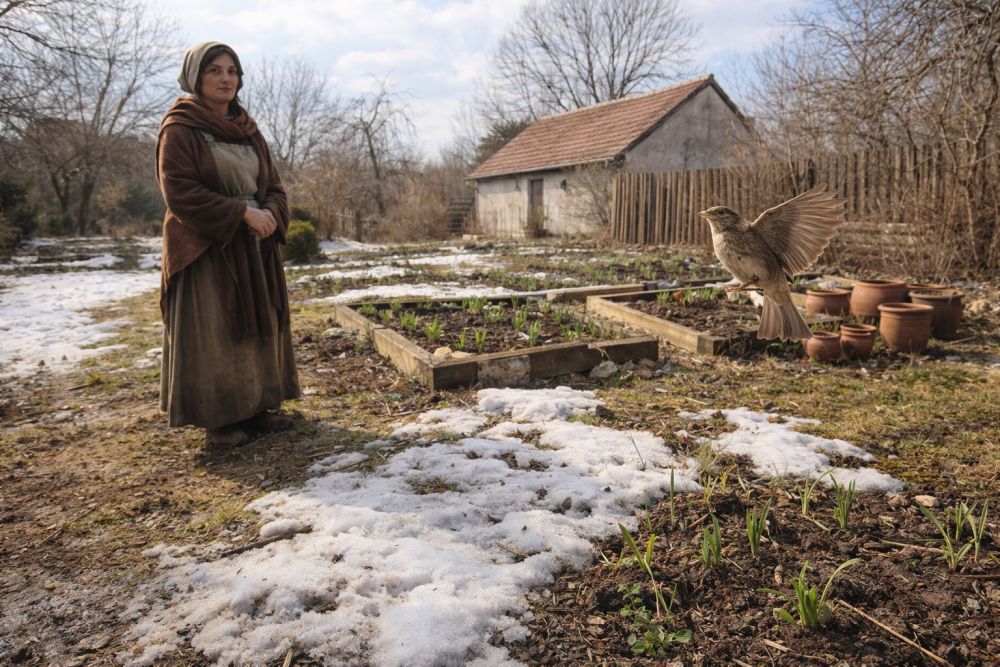
Does meltwater trace thin lines along southern exposures by afternoon?
Are orchard rows showing uneven snow retreat?
Do early stone fruit buds appear subtly fuller than they did a week ago?
A light snowfall now may insulate rather than intensify winter. A mild breeze may dry surface moisture without signaling lasting warmth. The calendar alone does not decide; observation does.
Orchard Decisions in a Transitional Week
This is often when pruning plans shift from theoretical to practical. Apples and pears may tolerate careful structural cuts if extended deep frost is no longer forecast. Vines are inspected for cane damage. Gardeners test soil texture in hand, gauging moisture and compaction rather than relying solely on air temperature.
The wisdom of the old saying lies not in certainty, but in timing. Winter rarely leaves all at once. It loosens gradually.
A Contemporary Perspective
Modern horticulture confirms what tradition sensed: increasing daylight, more than a single warm day, drives seasonal transition. Hormonal changes within buds begin before visible swelling. Freeze–thaw cycles redistribute moisture and begin loosening the soil profile. Microbial life responds in increments.
February 16 occupies that liminal corridor — not winter’s end, not yet spring, but the measurable easing between the two.