

January 23 sits at a delicate point in the winter calendar. The deepest cold has usually passed, daylight is slowly increasing, and yet nothing outwardly dramatic has changed.
Across Europe and beyond, this day was associated not with warnings or promises, but with quiet commitment — a sense that direction had been chosen, even if its consequences were still invisible.
Europe: Our Lady’s Betrothal and the Season of Quiet Decisions
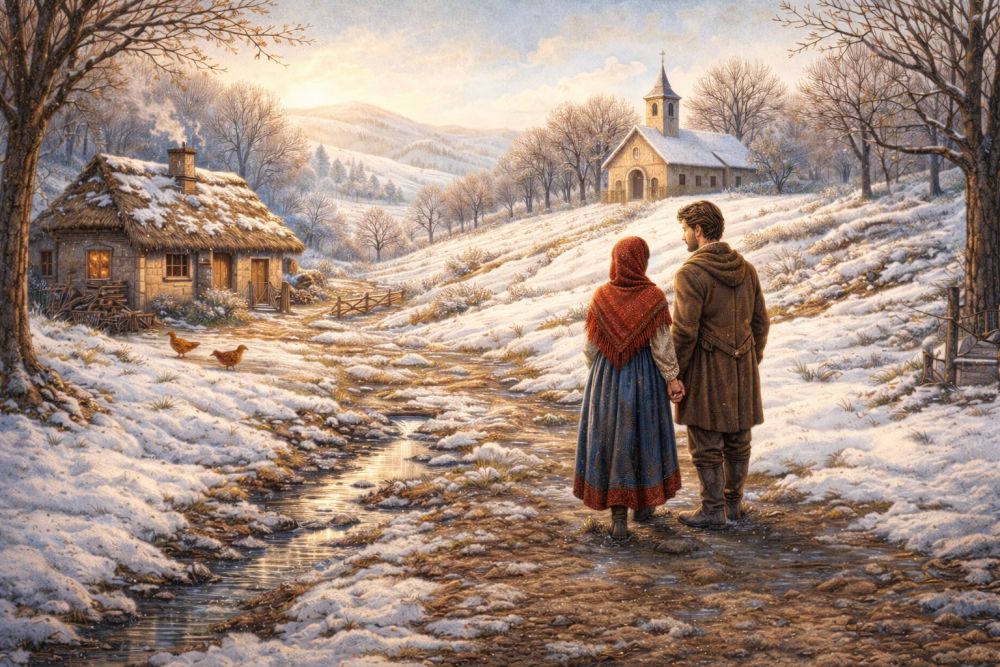
In parts of Central Europe, January 23 was remembered as Our Lady’s Betrothal an old Catholic observance recalling Mary’s betrothal to Joseph. In traditional life, a betrothal wasn’t a casual promise — it marked a decision that had already become binding, even before anything visibly changed.
That idea resonated strongly with rural seasonal thinking. Late January is also a threshold: winter still holds, yet the light is different, days lengthen by minutes, and the landscape seems to lean toward its next state. The day’s meaning therefore wasn’t loud celebration, but direction — the moment when the future is quietly chosen, long before it is seen.
Folk custom often associated such Marian days with moderation and calm: not starting noisy, heavy work, but focusing on order, mending, and preparation — outwardly and inwardly. In garden terms, it’s the same wisdom: don’t force change, don’t chase spring, but get ready for it with small, careful steps.
Animals as Messengers
In rural tradition, attention often turned to animals around January 23. Livestock behavior, birds becoming briefly more active, or wildlife appearing near settlements were interpreted as responses to subtle environmental changes.
These movements were not seen as signs of spring, but as reactions to pressure — cold, hunger, or shifting weather patterns. Observing animals helped people anticipate short-term changes rather than long-term relief.
Roots and Soil Under Pressure
Late January is a period when soil structure is especially vulnerable. Repeated freeze–thaw cycles can compact soil, damage fine roots, and disturb microbial balance.
Traditional gardening wisdom warned against unnecessary movement on garden beds during this time. January 23 became a reminder that even when light returns, the ground may still be fragile.
Modern soil science confirms this sensitivity. Stability matters more now than action.
Beyond Europe: A Shared Pattern of Caution
In North America, late January has long been associated with volatile weather patterns — warm spells followed by sharp reversals. Indigenous knowledge emphasized readiness and restraint rather than anticipation.
In East Asia, the days following the Great Cold were also treated carefully. While the seasonal cycle had turned, sudden cold snaps were expected and respected.
Across regions, January 23 carries the same message: do not mistake change for safety.
Why January 23 Still Matters
January 23 teaches attentiveness without haste or anxiety. It invites gardeners to recognize commitment before outcome, preparation before action.
This is not a day for celebration or intervention. It is a day for alignment.
Winter may still hold the land, but the direction has been set.
That quiet certainty is what gives January 23 its place in The Garden Almanac.