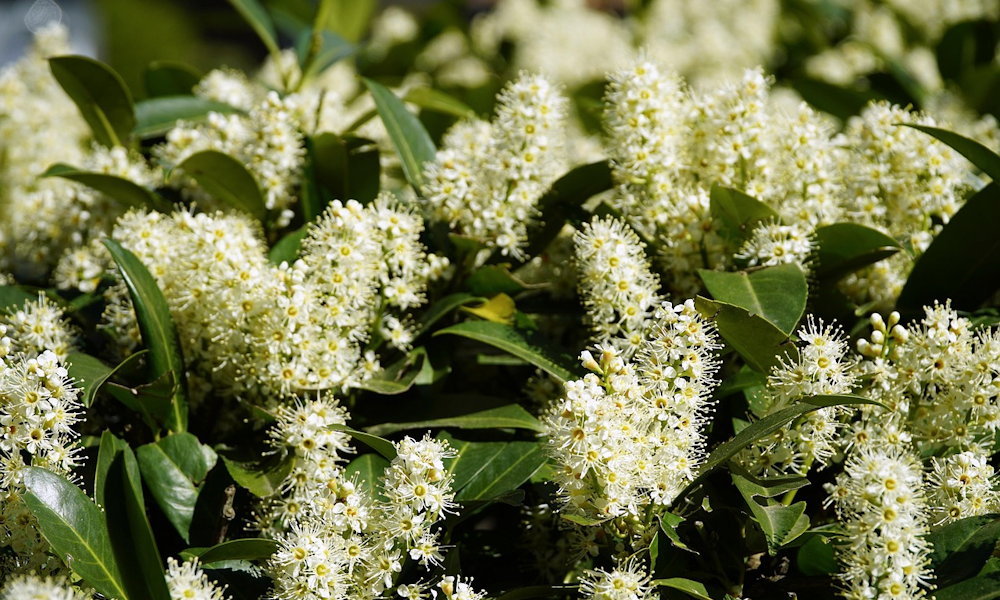

Few evergreen shrubs divide opinion as much as cherry laurel. Some consider it the most reliable hedging plant, others see it as overused. In reality, everything depends on the cultivar. Prunus laurocerasus is not a single plant type but a whole toolbox ranging from groundcovers to tall screening shrubs.
Origin and Garden History
Cherry laurel is native to the forests of southeastern Europe and Asia Minor. In its natural habitat it grows in the lower forest layer, adapted to partial shade, even moisture and sheltered conditions. It reached European gardens as early as the 16th–17th century, first in aristocratic estates and later in parks and private gardens.
Relatives and Garden Context
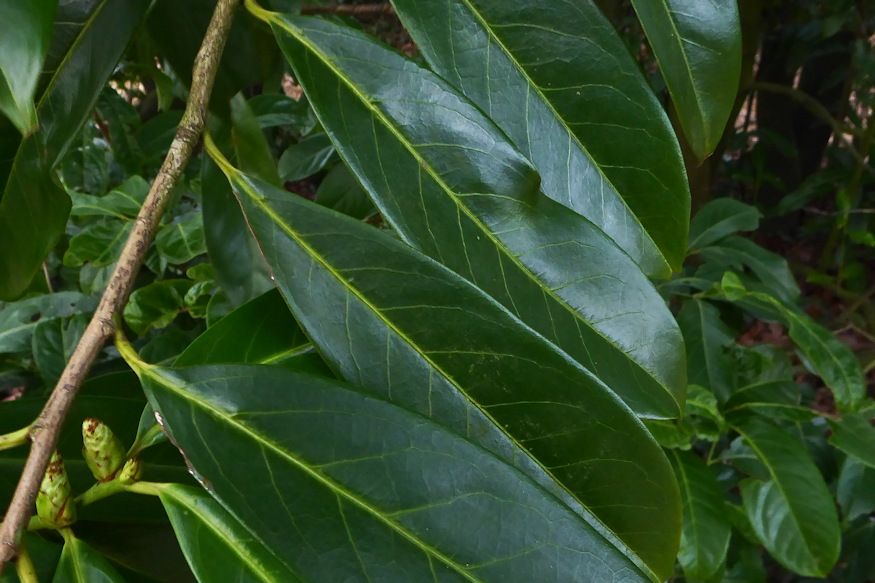
Cherry laurel belongs to the rose family (Rosaceae) and is related to cherries, sour cherries and almonds. Despite this lineage, its primary garden role is structural rather than ornamental: it defines space, provides background and ensures year-round greenery.
Care – Why It Works in So Many Gardens
One of the greatest strengths of Prunus laurocerasus is its adaptability. It tolerates partial shade, urban conditions and pruning remarkably well. While it prefers well-drained soil, many cultivars are surprisingly tolerant. Success depends far more on choosing the right cultivar than on intensive care.
Cherry Laurel Cultivars – Choosing the Right One Matters
‘Otto Luyken’ – A low-growing, spreading cultivar, rarely exceeding 1–1.2 metres in height. Ideal for low hedges or broad groundcover use. Slow growth means less frequent pruning.
‘Baumgartner’ – Compact and dense, responding well to regular pruning. Well suited for medium-height hedges with a uniform appearance.
‘Caucasica’ – Vigorous growth and large leaves. Excellent for tall screening hedges in larger gardens. Requires more space but delivers strong visual and acoustic shielding.
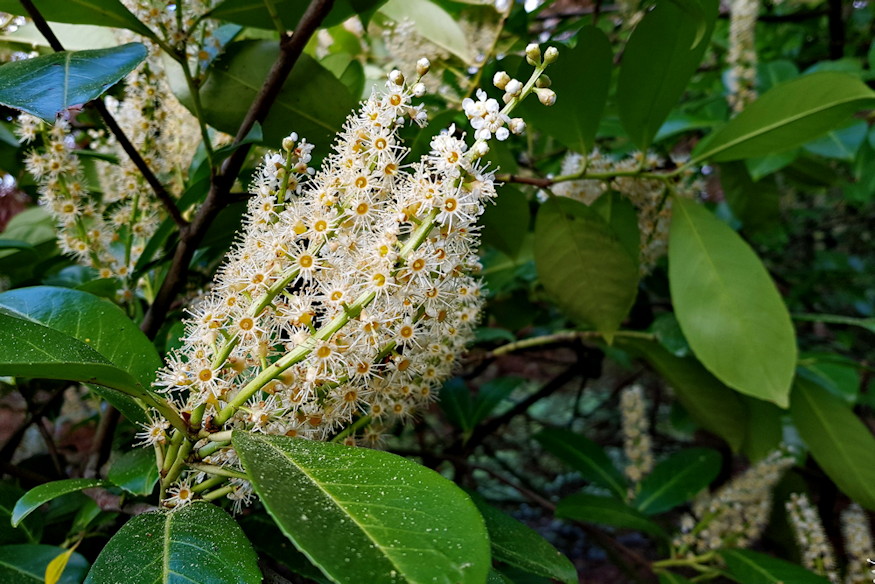
‘Etna’ – Decorative, glossy foliage with bronze-tinted young growth. Naturally dense and tidy even without heavy pruning.
‘Herbergii’ – Narrow, upright habit, ideal where width is limited but height is needed.
‘Klari’ – Even growth and good tolerance of shaping. Suitable for both hedging and solitary planting.
‘Magnolifolia’ – Noted for its very large leaves. Best used as an ornamental shrub rather than a formal hedge.
‘Mano’ – Compact, lower-growing cultivar for small gardens and front yards.
‘Mari’ – Dense foliage and fast screening, making it a practical hedge choice.
‘Miki’ – A modern, compact selection with a neat, controlled habit.
‘Piri’ – A low, spreading groundcover type, ideal for slopes and large surfaces.
‘Tekeres type’ – A vigorous, traditional cherry laurel form used mainly for classic hedges where ample space is available.
‘Zabeliana’ – Broad-spreading and low-growing, excellent for groundcover and bed edges.
‘Zöldszőnyeg’ – Extremely low and fast-closing groundcover, forming a dense green carpet.
Species form (Prunus laurocerasus) – Strong-growing large shrub or small tree, recommended only where sufficient space is available.
Quick Decision Guide – Matching Cultivars to Roles
For low, spreading evergreen groundcover, ‘Piri’, ‘Zabeliana’ and ‘Zöldszőnyeg’ are the most suitable choices. They close quickly and remain low without trying to become hedges.
For low to medium hedges where height control is important, ‘Otto Luyken’, ‘Mano’, ‘Miki’ and ‘Baumgartner’ perform reliably, offering dense foliage without excessive size.
For tall screening hedges providing privacy, noise reduction or wind protection, ‘Caucasica’, ‘Herbergii’ and ‘Mari’ are dependable options, though they require more space and regular pruning.
As specimen shrubs, ‘Magnolifolia’ and ‘Etna’ stand out, allowing their leaf size and new growth colour to be fully appreciated.
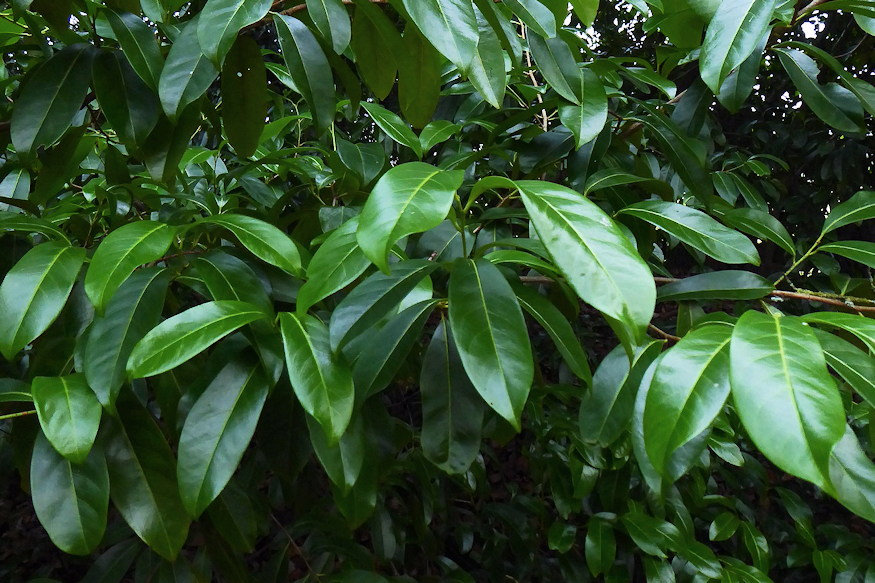
Planting Distance – Where Success Is Decided
For groundcover cultivars, spacing of approximately 80–100 cm is usually sufficient, allowing plants to spread and close over time.
Low and medium hedges perform best with 60–80 cm spacing. Tighter planting gives faster coverage but increases long-term pruning needs.
Tall hedges require more room: spacing of 80–120 cm allows healthy thickening and stable growth.
When planted as solitary shrubs, at least 150–200 cm of free space should be left around each plant.
Pruning – When and How
Cherry laurel tolerates pruning well, but timing matters. Late spring to early summer, after the first strong flush of growth, is ideal. Recovery is quick and foliage closes evenly.
Strong formative pruning is best done while plants are young to encourage dense branching. Older plants respond better to regular, moderate shaping rather than heavy cuts.
Using sharp hand pruners is recommended, as hedge trimmers can damage the large leaves, leading to browning.
Who Is Cherry Laurel For?
Cherry laurel is ideal for gardeners seeking evergreen structure and year-round coverage, provided they are willing to choose cultivars carefully. It is not a single universal solution, but a collection of reliable tools – effective only when the right plant is placed in the right role.