
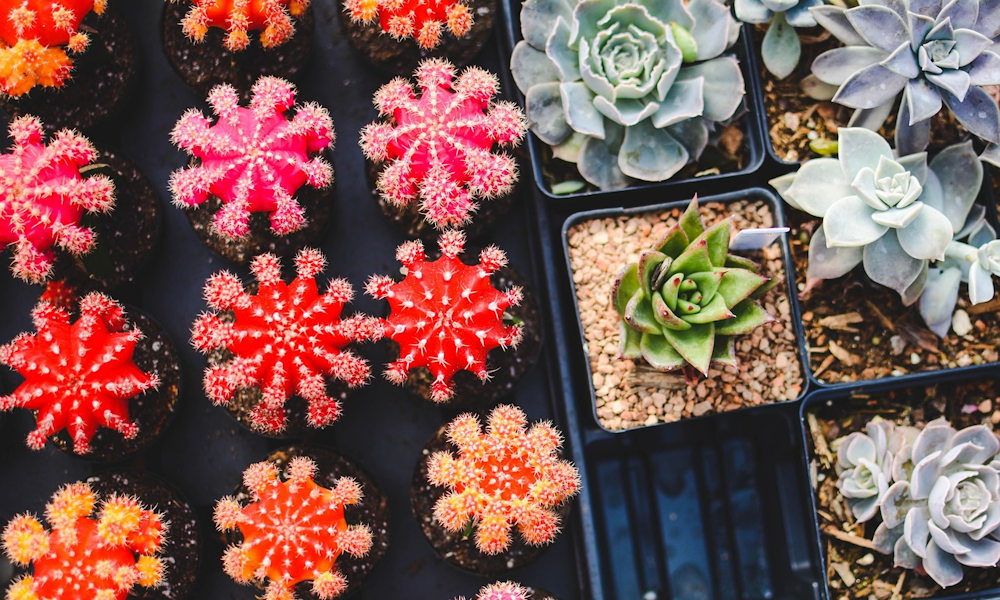

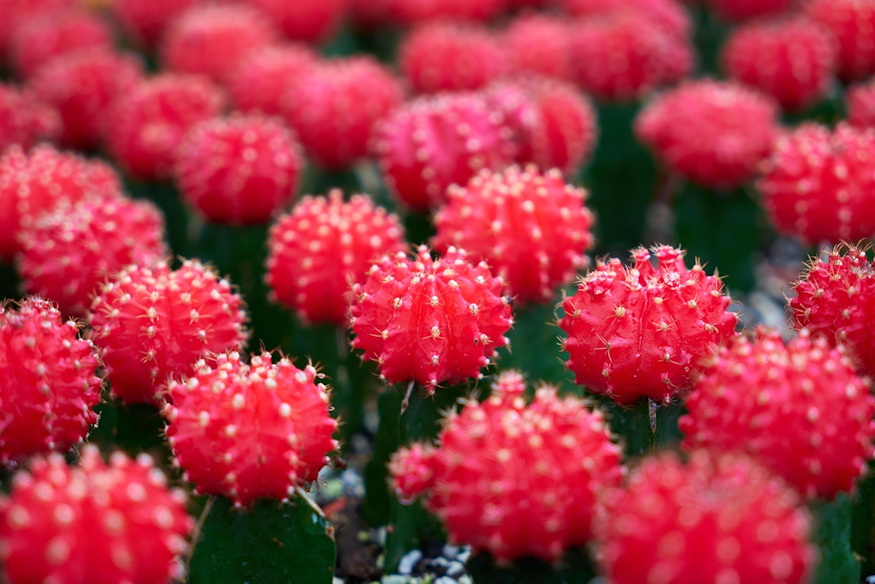
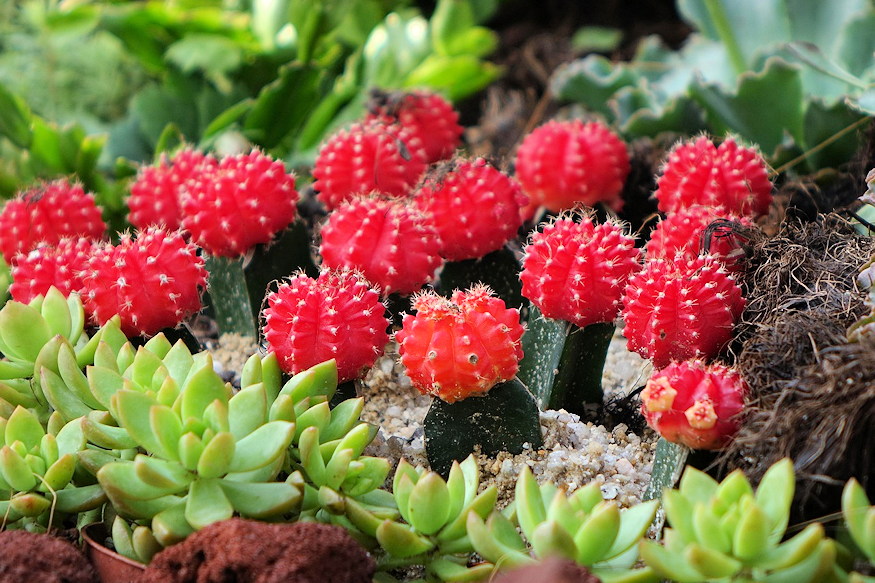
At first glance, these bright red and orange cacti look almost artificial, as if someone had dipped them in paint. Yet they are very much alive. The colour, however, tells an unusual story.
A Plant That Broke the Rules of Photosynthesis
Most red cacti seen in garden centres belong to Gymnocalycium mihanovichii. These plants lack sufficient chlorophyll, the green pigment responsible for photosynthesis. Without it, they cannot survive on their own.
Grafting: The Hidden Lifeline Keeping Red Cacti Alive
To compensate, these cacti are grafted onto a green, photosynthetically active rootstock, most commonly species of Hylocereus. The lower cactus produces energy, while the colourful top grows purely for appearance.
This grafting technique is a long-established horticultural practice, but few examples make it as visually striking as these vividly coloured cacti.
Why the Colour Looks Unreal – Without Any Dye
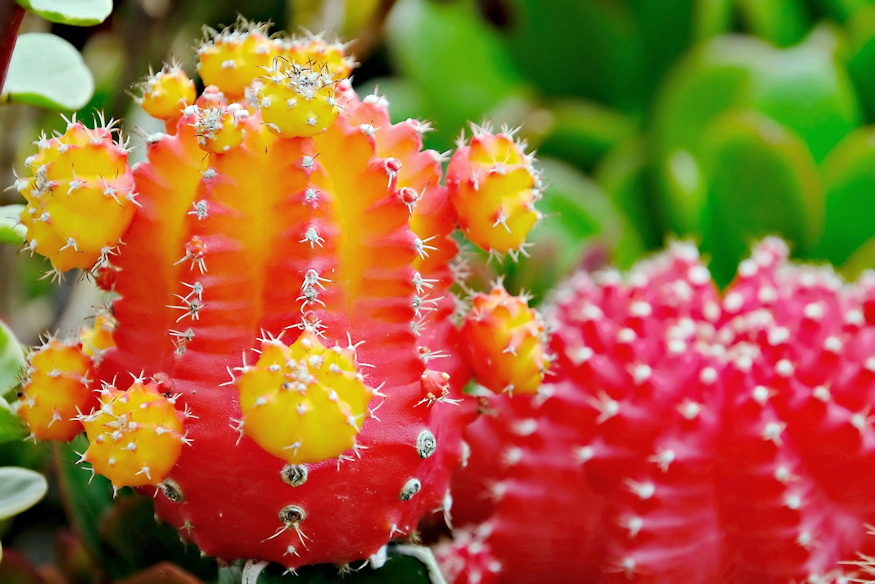
The red, pink, orange, or yellow tones are not artificial dyes. They result from naturally occurring pigments such as anthocyanins and carotenoids becoming visible once chlorophyll is absent.
How Long Do Grafted Red Cacti Really Live?
Grafted cacti typically have a shorter lifespan than non-grafted species. Over time, differences in growth rate between the rootstock and the graft can weaken the plant. These cacti are best appreciated as decorative, short- to medium-term houseplants.
Light, Water, and the Most Common Care Mistakes
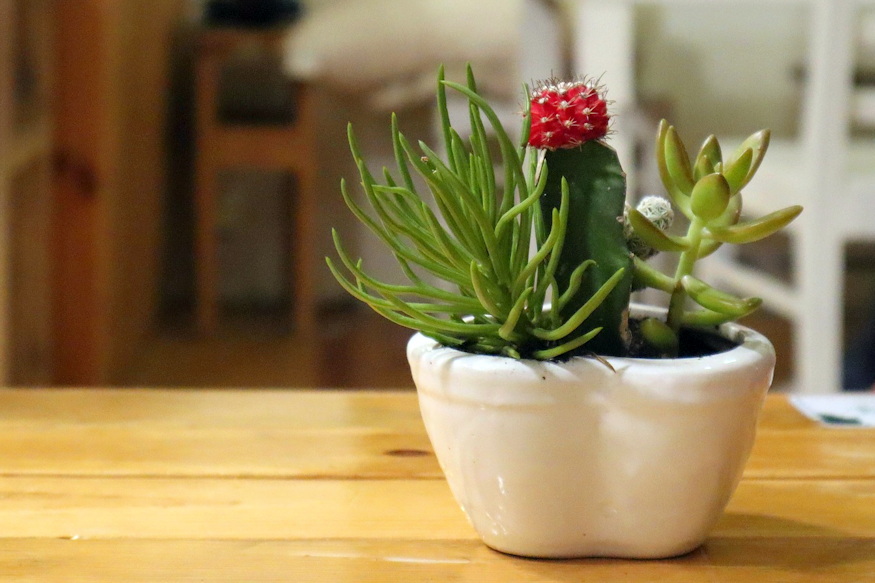
Bright, indirect light is ideal. Direct midday sun can damage the graft. Water sparingly, allowing the soil to dry between watering, and avoid excess moisture around the graft union.
Why These Cacti Still Win Gardeners Over
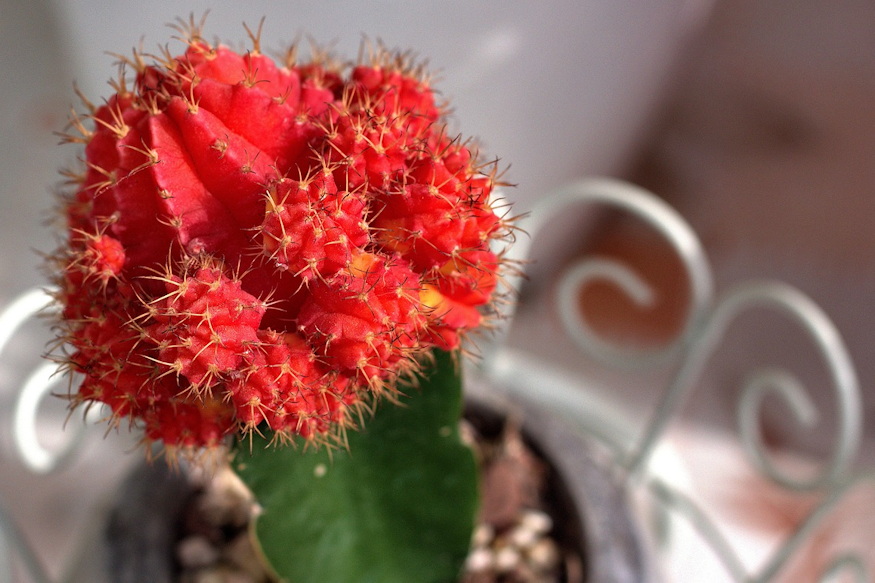
Red cacti are compact, dramatic, and accessible. For many people, they serve as an entry point into the wider world of succulents and cactus care. As a visual statement, they succeed brilliantly.
They may not be wild desert survivors, but they are a perfect example of how horticulture blends biology with creativity.