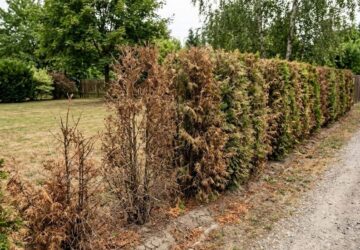
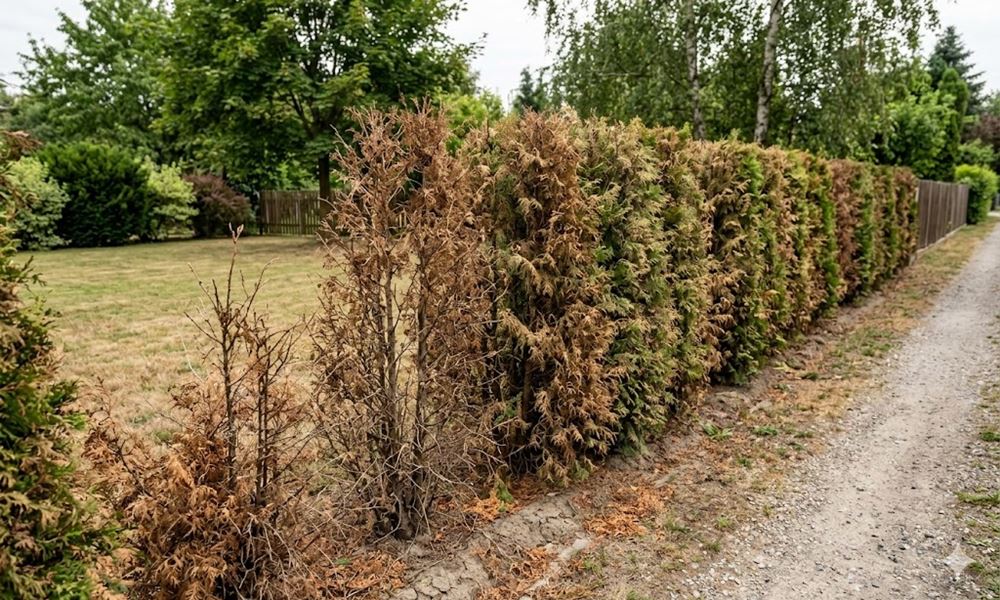

Across Central Europe many once‑healthy thuja hedges are turning brown or dying completely. What used to be a dense evergreen screen is increasingly replaced by thinning branches and dry patches. This widespread decline rarely has a single cause. In most gardens, thuja problems result from a combination of environmental stress, water shortage, soil conditions, and secondary pests or diseases.
Climate Stress
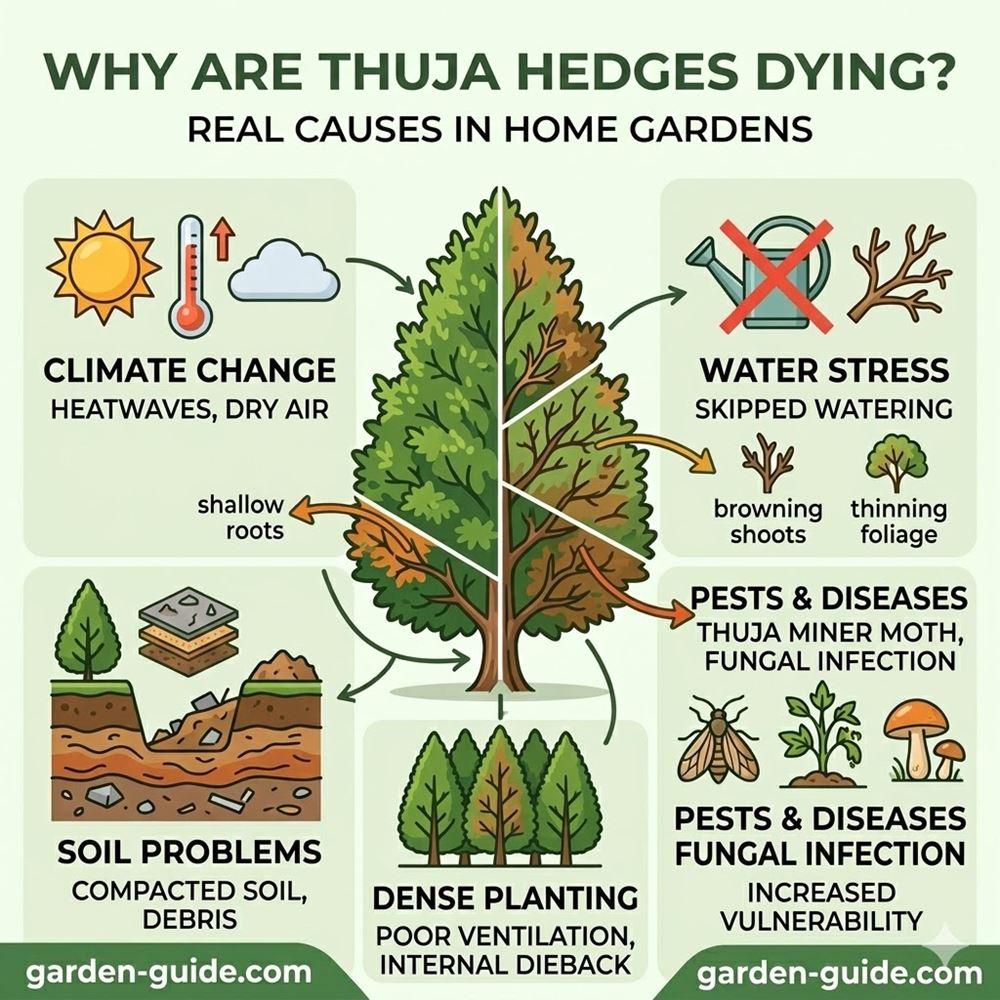
Most common garden thujas evolved in cooler and more humid environments. In recent decades, however, Central European summers have become hotter and drier. Long heat waves combined with dry air create significant stress for these plants.
Thuja roots are relatively shallow. This means they rely heavily on moisture in the upper soil layers. When the top 20–30 cm of soil dries out, the plant quickly experiences drought stress.
Water Stress
In many gardens thujas were historically grown without irrigation. That worked under older climate conditions but has become increasingly difficult during modern summers.
Repeated drought stress leads to symptoms such as:
- browning foliage
- drying inner branches
- thinning crowns
Once the plant loses enough foliage, recovery becomes much more difficult.
Soil Problems
Urban garden soils often contain compacted layers, construction debris, or poorly drained clay. These conditions restrict root growth and limit oxygen availability in the soil. Weak root systems make plants far more vulnerable to drought and disease.
Pests and Diseases
When thujas are weakened by environmental stress, pests and pathogens can appear. Common issues include:
- leaf miners
- fungal shoot dieback
- root diseases
These problems are often secondary effects rather than the original cause of decline.
Overcrowded Planting
Thuja hedges are frequently planted too densely. As plants mature, air circulation within the hedge decreases. Poor ventilation increases the risk of fungal infections and causes inner branches to die back.
Can Thuja Recover?
If damage is still limited, recovery may be possible. Helpful measures include deep watering, mulching around the root zone, and improving soil structure. However, when large portions of the plant have already died, replacement may be the only realistic option.
A Changing Garden Landscape
The decline of thuja hedges is not simply a plant disease problem. It reflects broader environmental changes affecting gardens across the region.
As conditions become hotter and drier, gardeners increasingly choose alternative hedge plants that tolerate these stresses more reliably.