

On February 14, millions of roses change hands while in most gardens the soil is still frozen. Shop windows are loud with color, yet the earth remains silent. And in that silence there is something quietly unsettling: nature does not recognize one-day romance. The logic of the garden is slow, consistent, and relentlessly honest. Valentine’s Day may be about bouquets, but the garden is about roots — the invisible work without which there is no spectacular bloom.
The Rose Is Not Romantic — It’s a Survivor
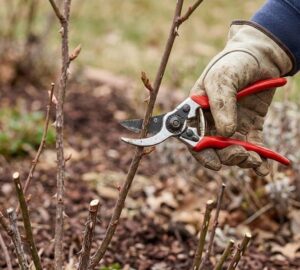
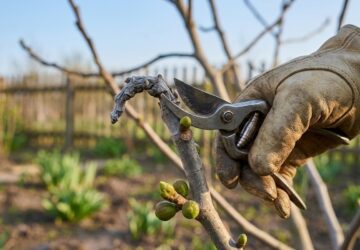
The rose may be the ultimate symbol of love, but any gardener knows it is stubborn, thorny, and occasionally dramatic. It must be pruned, thinned, and sometimes cut back hard to truly flourish. Sound familiar? The rose reminds us that behind every impressive flowering lies invisible labor — in relationships as well.
Historically, it is no accident that the rose became the emblem of love. In ancient Greece it was associated with Aphrodite, in Rome with Venus. During the Middle Ages, within the culture of courtly love, the red rose became a secret message of passion. By the 19th-century Victorian “language of flowers,” it carried a precise meaning: a declaration of love. When we give roses today, we are repeating a cultural code thousands of years old — not merely handing over a flower.
The Patience of Bulbs
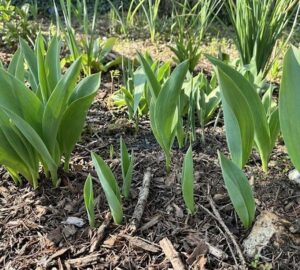
Tulips, daffodils, and hyacinths are still waiting beneath the soil. We planted them in autumn, and for months nothing seemed to happen. Without knowing what lies underground, one might assume inactivity — yet the roots are constantly at work. Valentine’s Day resembles the first emerging shoot: a visible moment, but one built upon long, unseen preparation.
A Potted Plant Is Not a One-Night Gesture
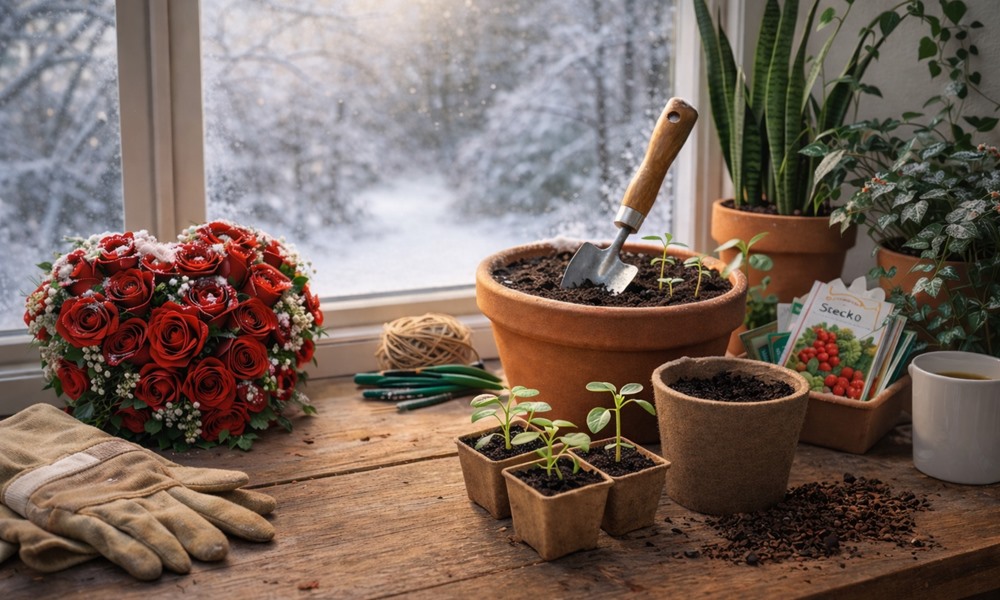
A cut bouquet is beautiful for days; a potted plant is responsibility. It asks for light, water, attention. Giving a living plant is, in truth, offering long-term care. Less dramatic perhaps — but far more sincere.
The Gardener Is a Realist
In the garden, there is no instant flowering and no “quick romantic solution.” If we plant something in February, we see results in spring. If we neglect it, there are consequences as well. Nature does not dramatize — it simply responds.
A Practical Valentine’s Tip for Gardeners
If you are determined to give a plant on February 14, choose one that tolerates indoor conditions, avoid overly delicate species, and consider who will water it in March. Romance is not decided by the number of roses received, but by whether we plant something together that later becomes a shared memory. The garden — if we listen — tells us every year: love is not a day, but a succession of seasons.