

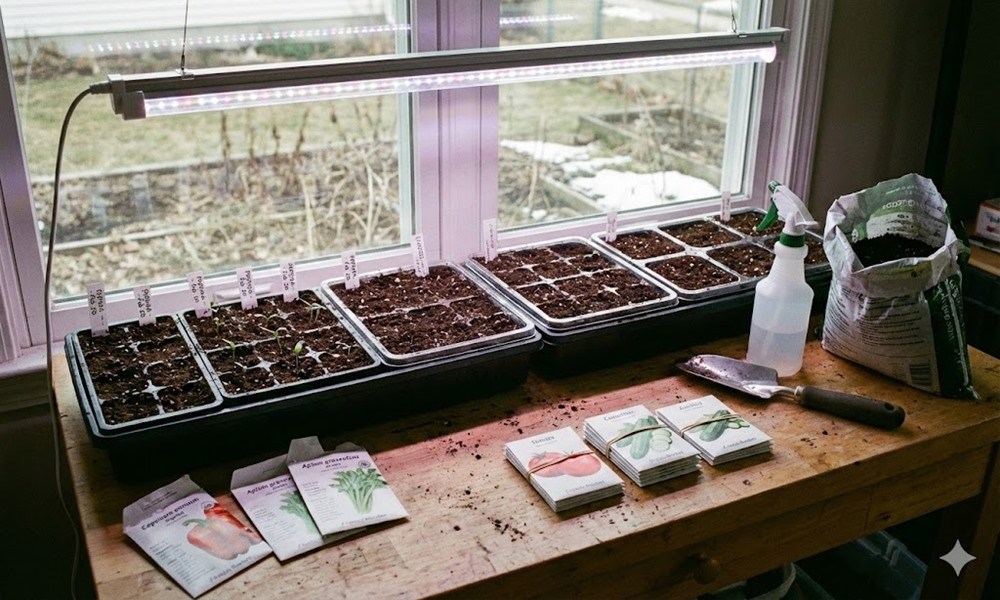

From late February onward, gardeners feel the urge to begin. Seed trays appear, potting soil fills the air, and the season seems officially underway. Yet not every vegetable rewards early sowing. Successful seedling production depends less on the calendar and more on light availability, temperature, and the realistic outdoor planting date.
Pepper – Long Growing Season, Early Sowing (Capsicum annuum)
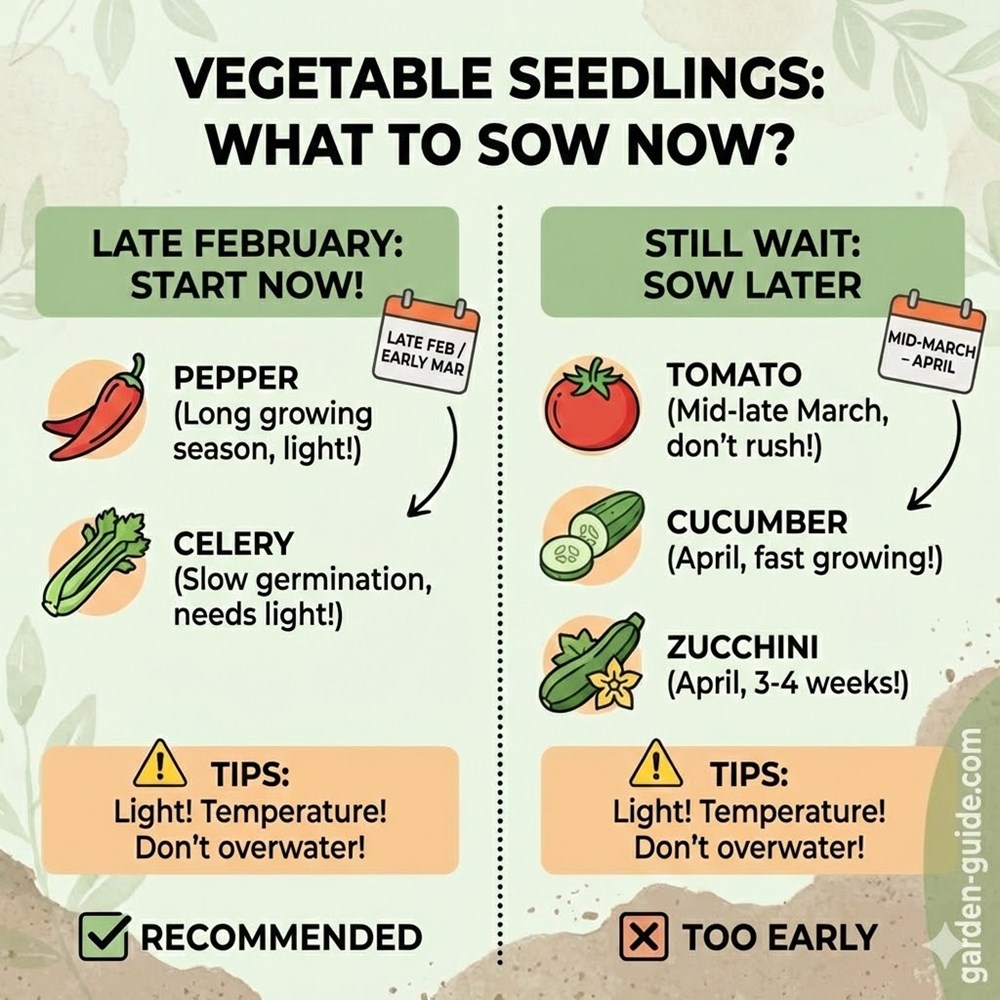
Peppers are classic candidates for February sowing. Their long growing season justifies an early start, especially for large-fruited varieties. Ideal germination temperatures range between 22–25 °C, often requiring heated propagation. Light is crucial. Insufficient February sunlight can result in weak, elongated seedlings. Supplemental lighting may be necessary. Though slow to start, peppers reward patience with sturdy growth.
Tomato – Do Not Rush (Solanum lycopersicum)
Tomatoes develop faster than peppers, and sowing too early can produce oversized seedlings before outdoor conditions are suitable. In most home gardens, mid to late March is optimal. They require 20–22 °C for germination, strong light, and moderate watering. Overwatering and poorly aerated soil increase the risk of damping-off disease.
Celery – For Patient Gardeners (Apium graveolens)
Celery germinates slowly and grows gradually, making late February or early March sowing appropriate. Its tiny seeds should not be buried deeply; surface sowing with light coverage is sufficient. Light is required for germination. Although demanding, early sowing is advantageous due to its extended growing period.
Cucumber – Better to Wait (Cucumis sativus)
Cucumbers grow rapidly and require warmth. Sown too early, they quickly outgrow their containers and suffer from inadequate light. Early to mid-April is usually more appropriate for seedling production. Because cucumbers have sensitive roots, sowing individually in separate pots reduces transplant stress.
Zucchini – Short Nursery Period (Cucurbita pepo)
Zucchini does not require a long seedling stage. It germinates quickly and grows vigorously. Sowing three to four weeks before transplanting is sufficient. Early sowing often leads to oversized, difficult-to-manage seedlings.
Typical February Mistakes
The most common error is sowing too early and underestimating light conditions. Leggy seedlings are weaker and more prone to damage. Overwatering, cold soil, and poor air circulation further increase failure rates.
Successful seedling production is about timing rather than quantity. Peppers and celery deserve attention now, tomatoes soon, while cucumbers and zucchini can wait.