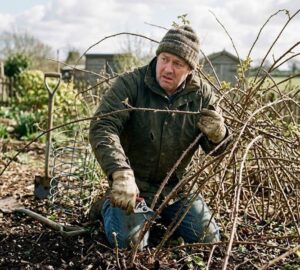

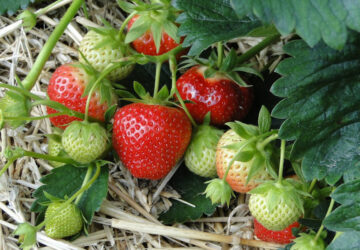

Raspberries sit somewhere between generous fruit crop and mildly chaotic garden adventurer. When they are producing well, everybody loves them. You can snack on them straight from the cane, turn them into jam, and suddenly feel like the sort of person who has their life together in a deeply wholesome way. But leave them alone for a season or two, and they start to look as if they have quietly declared independence in the corner of the garden.
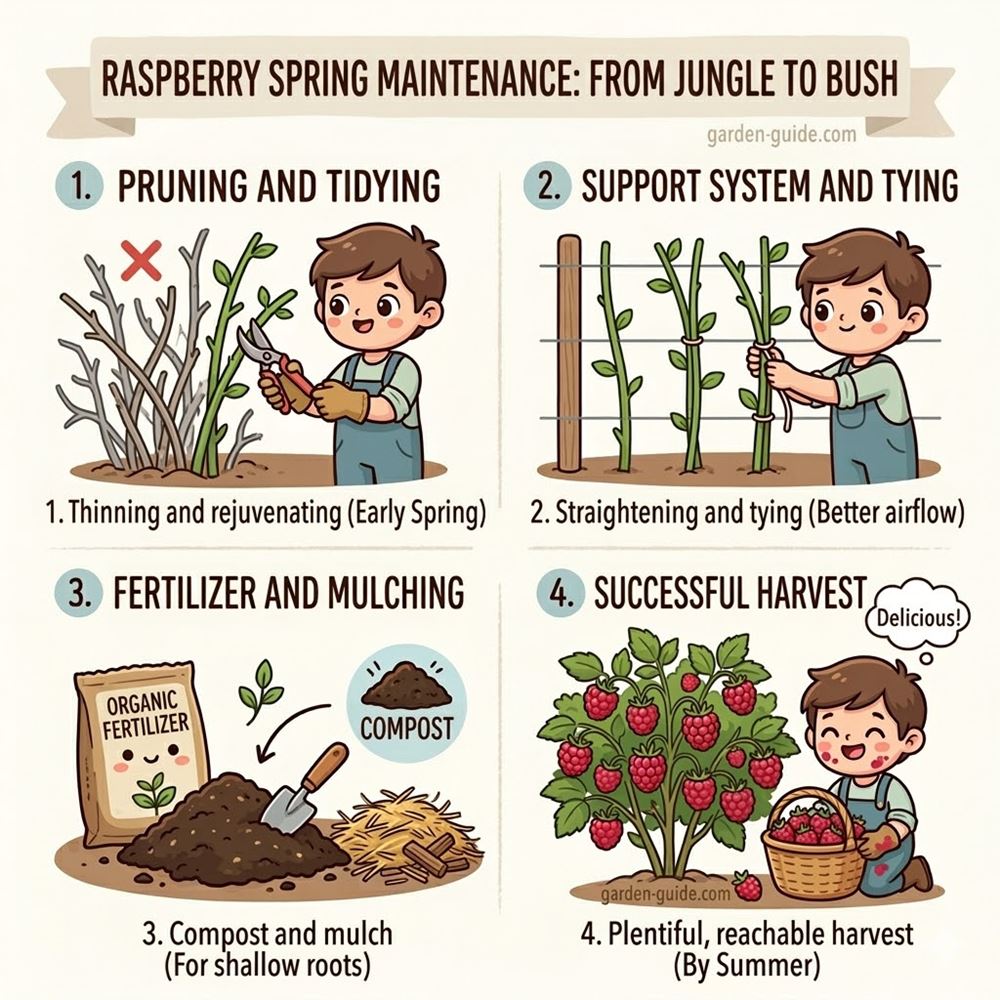
That has happened to me too. I once left a row of raspberries with a very confident “I’ll sort that out in spring” attitude. Spring arrived, and what I found was less a fruit patch and more a prickly survival challenge with canes shooting off in all directions. That was the moment I was reminded of a basic gardening truth: what feels like strict tidying in spring usually comes back as easier harvesting in summer.
The good news is that raspberries are not especially sensitive about being managed. If you give them the right care in spring, they bounce back beautifully. The bad news is that they will not organize themselves out of kindness.
Spring raspberry care is really about smart structure
The main spring jobs are pruning, feeding, mulching, and sorting out water management. Then there are the smaller but important details that decide whether your raspberry row will be pleasant to harvest from or whether it will feel like a thorny puzzle with fruit hidden inside.
It also helps to know that not all raspberries behave the same way. Summer-fruiting and autumn-fruiting types need slightly different handling. A lot of spring confusion begins when gardeners stare at every cane with the same expression and ask the same question: are you useful, or are you leaving?
1. Pruning decides the season
Pruning is the most important part of spring raspberry care. This is where you decide whether the plant will spend its energy on productive canes or on maintaining a crowded, confusing thicket.
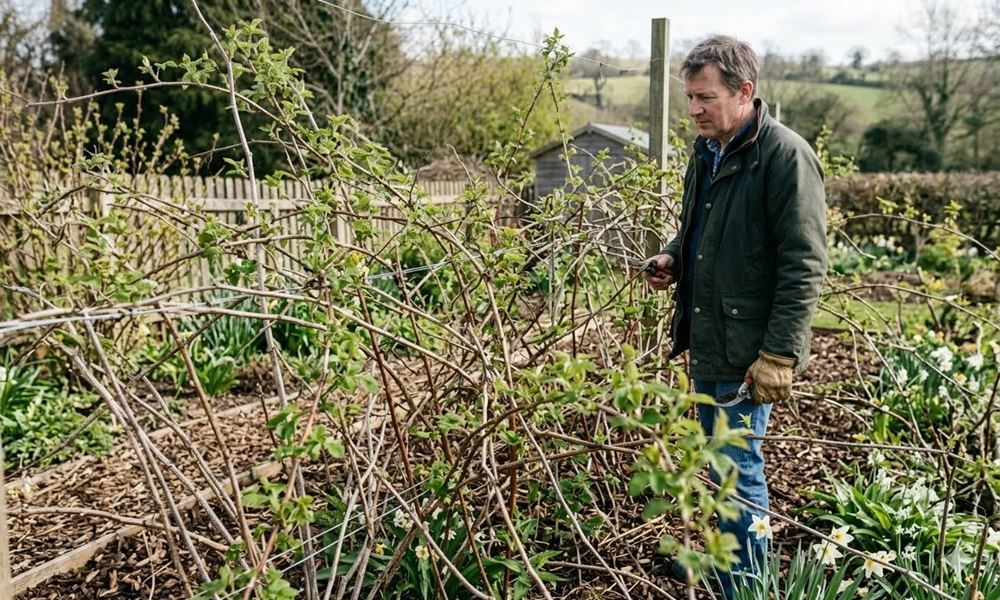
With summer-fruiting raspberries, the canes that fruited last year will not fruit again, so those need to go. In spring, it also makes sense to remove damaged, diseased, frost-hit, or very weak growth. The goal is to keep the healthiest and strongest canes in good positions.
University horticulture guidance regularly points out that without yearly pruning, raspberries thicken up quickly. Overcrowded growth leads to poorer airflow, weaker cropping, and more disease pressure. In summer-fruiting varieties, spring thinning and keeping the row width under control matter a lot because raspberries are enthusiastic wanderers. The University of Minnesota notes how easily they spread into a wider patch if suckers are not managed, while Oregon State University emphasizes that pruning and reducing excess growth improve fruit quality.
Autumn-fruiting raspberries are simpler. Many gardeners cut all canes down close to the ground in early spring and then harvest from the fresh canes produced that same year. For beginners, this can feel wonderfully liberating. Finally, a berry crop that occasionally forgives uncertainty.
2. A support system is not overthinking
Raspberries may look like a shrub, but they behave much better with support. A simple wire system, trellis, or other framework helps keep canes upright, improves airflow, and makes harvesting less like a thorny obstacle course.
Good support is not just for commercial plantings. It helps in home gardens too. Canes dry faster after rain, fruit is easier to see and reach, and the whole patch becomes more manageable. Put more simply: less crouching, less snagging, less trying to harvest sideways while pretending this is all going smoothly.
3. Feed them, but do not overdo it
In spring, raspberries benefit from access to nutrients as new growth begins. Compost, well-rotted organic matter, or a moderate, balanced feeding approach can all help. Guidance from Penn State and Oregon State suggests raspberries respond well to soils rich in organic matter, while the University of Minnesota warns that both underfeeding and overfeeding can cause trouble.
Raspberries do not work on fast-food logic. More fertilizer does not automatically mean more fruit. Too much nitrogen can encourage lush leafy growth at the expense of cropping, and overly soft growth may be more vulnerable. So spring feeding should be thoughtful rather than enthusiastic.
If you make your own compost, raspberries are a very satisfying place to use it. Kitchen and garden leftovers becoming dessert is one of gardening’s more elegant plot twists.
4. Mulch matters more than people think
Raspberries have relatively shallow roots, which means they are especially sensitive to drying out and overheating near the soil surface. That is where mulch becomes extremely useful. Straw, bark, leaf compost, or other organic mulches help conserve moisture, suppress weeds, and improve conditions in the root zone.
Penn State also notes that some mulching materials, such as fresh sawdust or large amounts of bark, can temporarily tie up nitrogen as they decompose, so balance matters. The goal is not to throw just anything around the plants. It is to create a root environment that actually supports growth.
Bare, hardened soil around raspberries is rarely a sign of virtue. A good mulch layer is more like a sensible spring jacket: not indulgent, just wise.
5. Water should be steady, not dramatic
As raspberries grow, flower, and begin preparing fruit, they need consistent moisture. Horticultural guidance often stresses that lack of water can reduce berry size, weaken growth, and lower yields. But overwatering is not a clever solution either.
The target is evenly moist soil, not mud. Mulch helps with this too, which is why getting the patch in order early in spring pays off later. Raspberries dislike the kind of gardening where they are parched one week and then drowned the next in a burst of guilt-driven heroism.
6. Weed control should be gentle
Because raspberry roots sit fairly close to the surface, aggressive hoeing around the plants can do more harm than good. Most good advice leans toward careful weed control, mulching, and sensible maintenance of the rows rather than dramatic digging.
This matters because raspberries are not only sensitive in their fruiting wood. Their root zone is part of the equation too. If you attack the patch in spring as though you are turning over a potato field, the plants are unlikely to applaud.
7. Keep an eye on cane health
Spring is when you can start to see which canes are damaged, weak, diseased, or winter-injured. Removing these early helps improve airflow and reduce the chance of future problems.
Raspberries do not enjoy a permanently damp, stagnant little climate inside the row. That is the sort of place where disease feels at home long before the gardener does.
So what is the real secret?
The secret to spring raspberry care is not complicated. Thin the canes, tidy the row, feed with restraint, mulch well, and keep moisture even. In other words, do the handful of things the plant cannot sensibly manage for itself.
Do that, and summer harvesting becomes much easier, and much less like negotiating with a bramble-covered jungle. Raspberries tend to overdo their own enthusiasm. Our job is simply to turn that energy into fruit. Honestly, that is one of the better spring bargains in the garden.