

Every March, gardeners feel the same urge: it is finally time to start tomatoes. Seed packets appear on the kitchen table, trays are filled with soil, and the season seems ready to begin. But enthusiasm often gets ahead of nature. One of the most common problems with tomato seedlings is not disease, poor soil, or bad seed quality. It is simply timing. Sowing too early is a classic mistake that affects countless gardeners each spring.
The Hidden Problem With Early Sowing
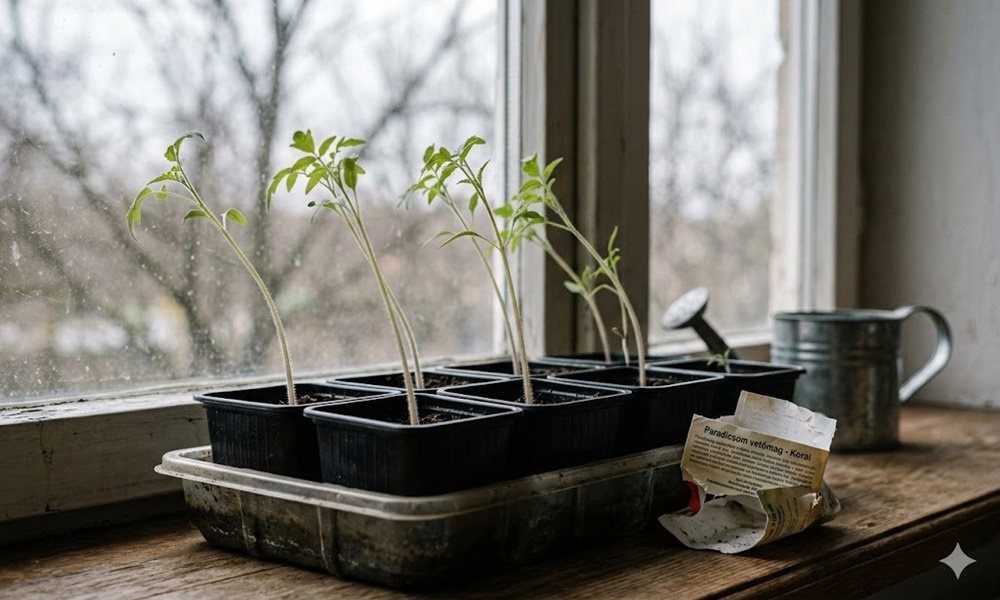
Tomatoes are warm‑season plants that evolved to grow under strong light and long days. Early March rarely provides those conditions indoors. Seeds germinate quickly, but the environment cannot support balanced growth. Light levels remain low, windows provide limited sun exposure, and the days are still relatively short. As a result, seedlings stretch upward in search of light.
Why Lack of Light Causes Weak Seedlings
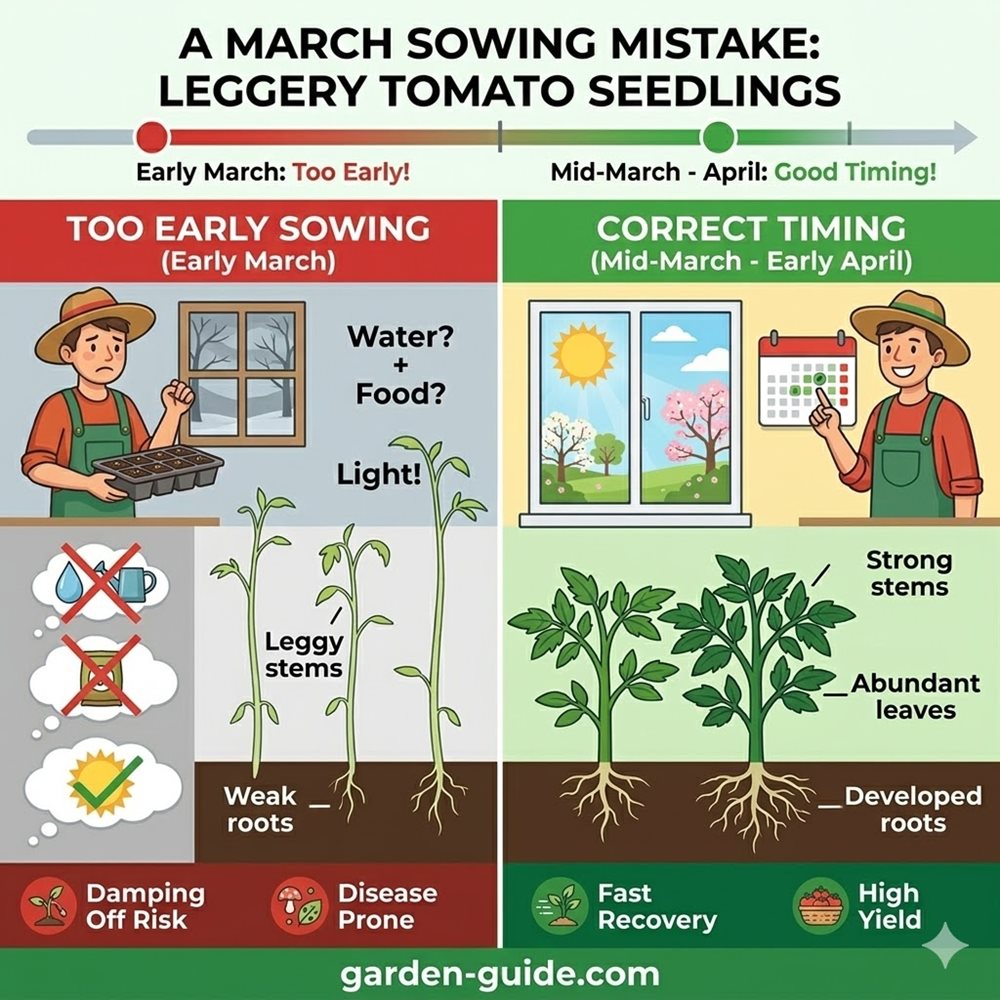
Tomato seedlings respond dramatically to insufficient light. When light intensity is low, plants elongate rapidly. Stems become thin, the distance between leaves increases, and the plant loses its compact structure. This process, known as etiolation, produces fragile plants that are far less resilient.
Leggy seedlings often:
- fall over easily,
- develop weaker root systems,
- become more susceptible to disease,
- struggle to recover after transplanting.
Many gardeners mistakenly assume that extra fertilizer or watering will help. In reality, the main limitation is simply light.
When Seedlings Outgrow the Window Too Early
Tomatoes grow quickly. Seeds sown too early in March can produce large plants by mid‑April. However, outdoor conditions are often still unsuitable. Soil temperatures remain low and late frosts may still occur. Gardeners then face a common dilemma: seedlings that are already too large must remain indoors for weeks longer. During this waiting period plants continue to stretch, containers become too small, and the overall structure weakens. The result is a tall but fragile plant.
When Should Tomatoes Actually Be Sown?
In most Central European gardens, the ideal sowing window for tomato seedlings falls between mid‑March and early April. The exact timing depends on light availability and indoor growing conditions.
Earlier sowing may succeed when:
- seedlings receive intense natural light,
- sufficient space is available, or
- supplemental grow lights are used.
Under typical windowsill conditions, however, sowing too early usually creates more problems than benefits.
A quick date-and-setting guide (so there’s no confusion):
- Windowsill / indoors (no grow light): sowing is usually best mid‑March to early April.
- Heated greenhouse / strong supplemental light: sowing can start from early March, because light and temperature are more controllable.
- Unheated polytunnel: aim for mid‑ to late March, and only if you can ventilate on sunny days and protect seedlings during cold nights.
- Transplanting outdoors: typically after frost risk, in many gardens around mid‑May.
- Direct outdoor sowing of tomatoes: generally not recommended — tomatoes are usually grown as transplants, and direct sowing outdoors often means delay and stress rather than a head start.
(Exact dates vary by microclimate, but the principle is constant: light + temperature + frost‑safe timing.)
How to Grow Strong Tomato Seedlings
Healthy tomato seedlings are compact, sturdy, and deep green. Their stems are thick and their leaves well developed.
Three main factors determine success:
- strong light
- moderate temperatures
- proper timing
Warm rooms combined with weak light almost always produce elongated seedlings.
Patience Pays Off
Tomatoes are not a race. A seedling that germinates two weeks later but grows under better light conditions often catches up quickly and may outperform earlier plants.
The best tomato seedling is not the one that appears first on the windowsill. It is the one that reaches the garden with strong roots, balanced growth, and the resilience needed for the outdoor season.
Sometimes the smartest gardening decision in March is simply to wait another week.