


In early March, sunny afternoons create the illusion of spring readiness. Air temperatures rise quickly, inviting early sowing. Yet beneath the surface, soil conditions may tell a different story. Germination depends on soil temperature, not air warmth.
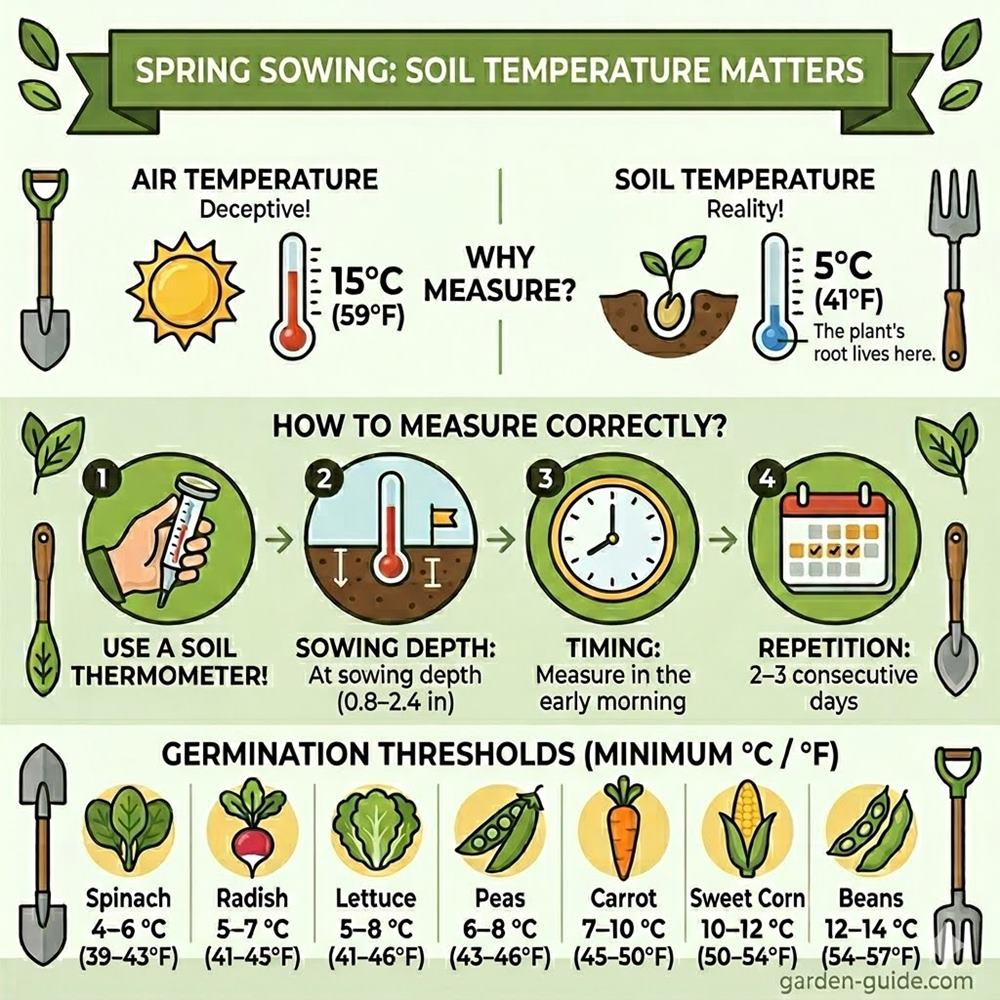
Why Air Temperature Is Misleading
Seeds germinate in response to soil conditions. Water absorption, enzymatic activation, and cellular division are all temperature-dependent processes occurring underground.
Air warms rapidly under sunlight, while soil warms slowly and cools significantly overnight. Sowing into cold soil delays emergence and increases fungal risk. Air temperature signals comfort. Soil temperature determines biology.
How to Measure Properly
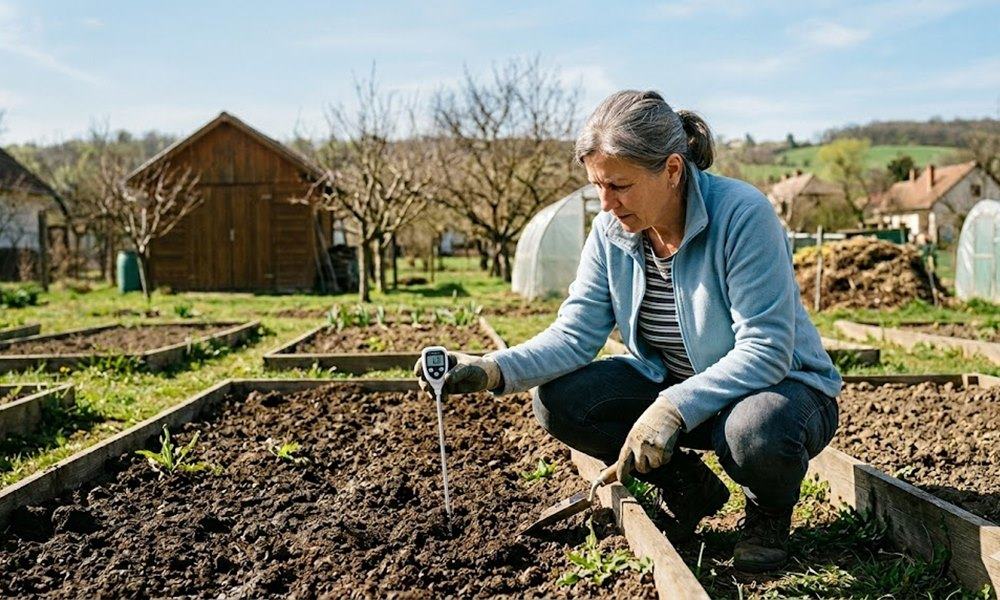
Accurate measurement requires:
- A soil thermometer designed for ground insertion.
- Measurement at actual sowing depth.
- Morning readings to capture minimum temperature.
- Repeated measurements over consecutive days.
Stability matters more than midday peaks.
Crop-Specific Thresholds
Different crops require different minimum soil temperatures:
- Spinach: 4–6 °C
- Radish: 5–7 °C
- Lettuce: 5–8 °C
- Peas: 6–8 °C
- Carrot: 7–10 °C
- Sweet corn: 10–12 °C
- Beans: 12–14 °C
A difference of just a few degrees can dramatically influence germination speed and uniformity.
Decision-Making Based on Soil Data
If soil consistently reaches the crop’s minimum threshold, sowing is justified. If warmth is temporary and unstable, patience yields better long-term results. Seeds sown later into adequately warmed soil often catch up or outperform prematurely planted crops. Success depends less on early action and more on correct timing.
Soil Type and Exposure
Sandy soils warm quickly but fluctuate more. Clay soils warm slowly yet maintain stability. South-facing beds reach thresholds sooner than shaded areas. Soil temperature reflects microclimate as much as season.
Data Over Guesswork
Using a soil thermometer may seem technical, even excessive. Yet it transforms gardening from intuition alone into informed decision-making. Those who measure reduce uncertainty. In early spring, that advantage can mean weeks of difference in crop development.