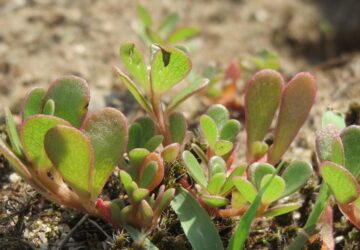

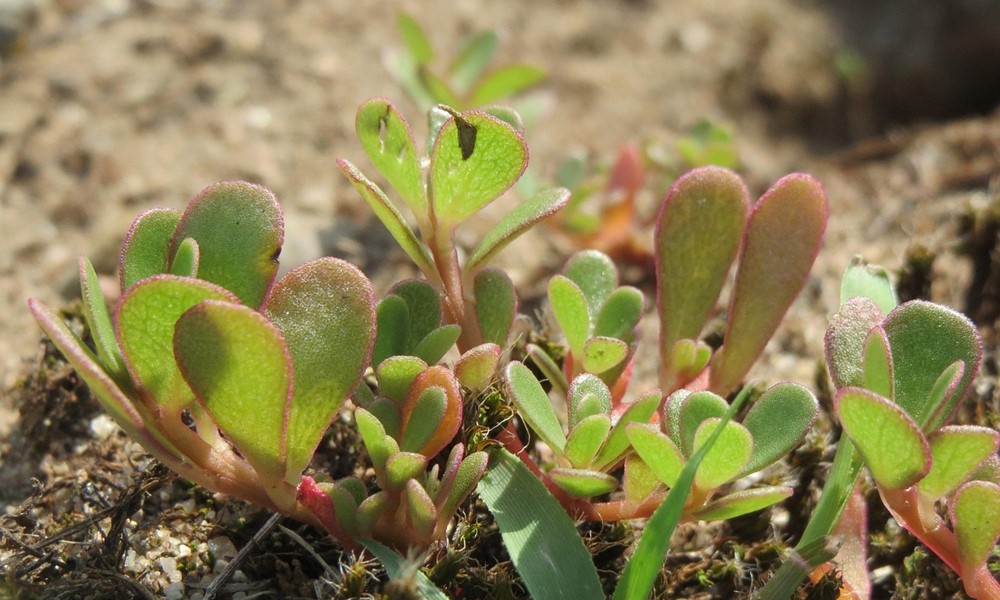

Few plants in the home garden carry such a split reputation as purslane (Portulaca oleracea). It is often dismissed as a weed, yet increasingly praised as a nutritional curiosity. In recent years, purslane has been highlighted in articles, dietary recommendations, and gardening discussions for one main reason: its unexpectedly high omega-3 fatty acid content. But what does that actually mean in measurable terms, and how solid is the scientific evidence behind the claim?
Why Talk About Omega-3 in a Plant at All?
Omega-3 fatty acids are usually associated with fish and other marine foods, which provide EPA and DHA — the long-chain forms most directly used by the human body.
Plants, by contrast, mainly contain alpha-linolenic acid (ALA), a shorter-chain omega-3 fatty acid. The human body can convert ALA into EPA and DHA, but only to a limited extent.
Most leafy greens contain very little ALA. This is where purslane stands out.
The Numbers That Put Purslane on the Map
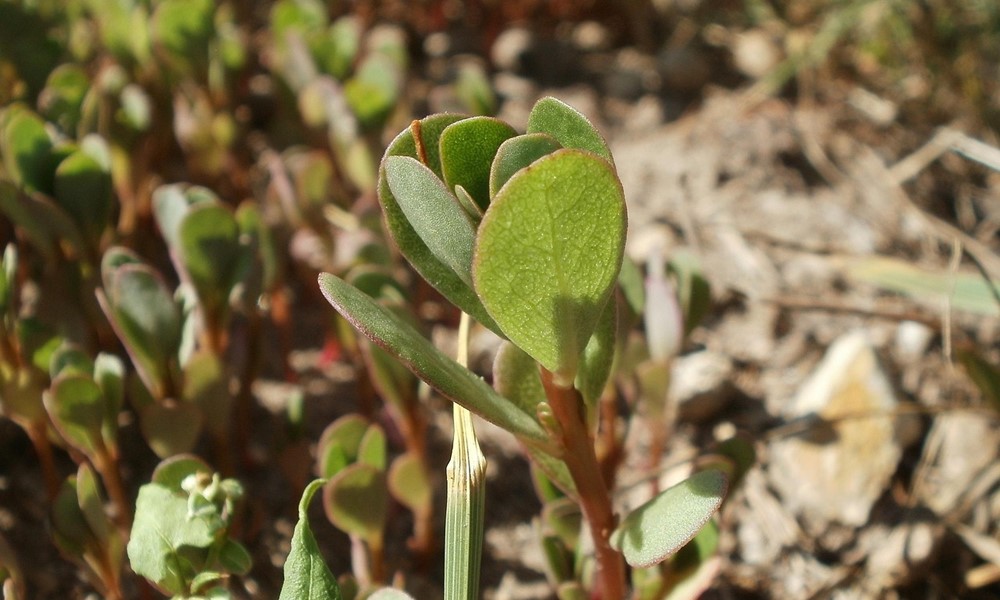
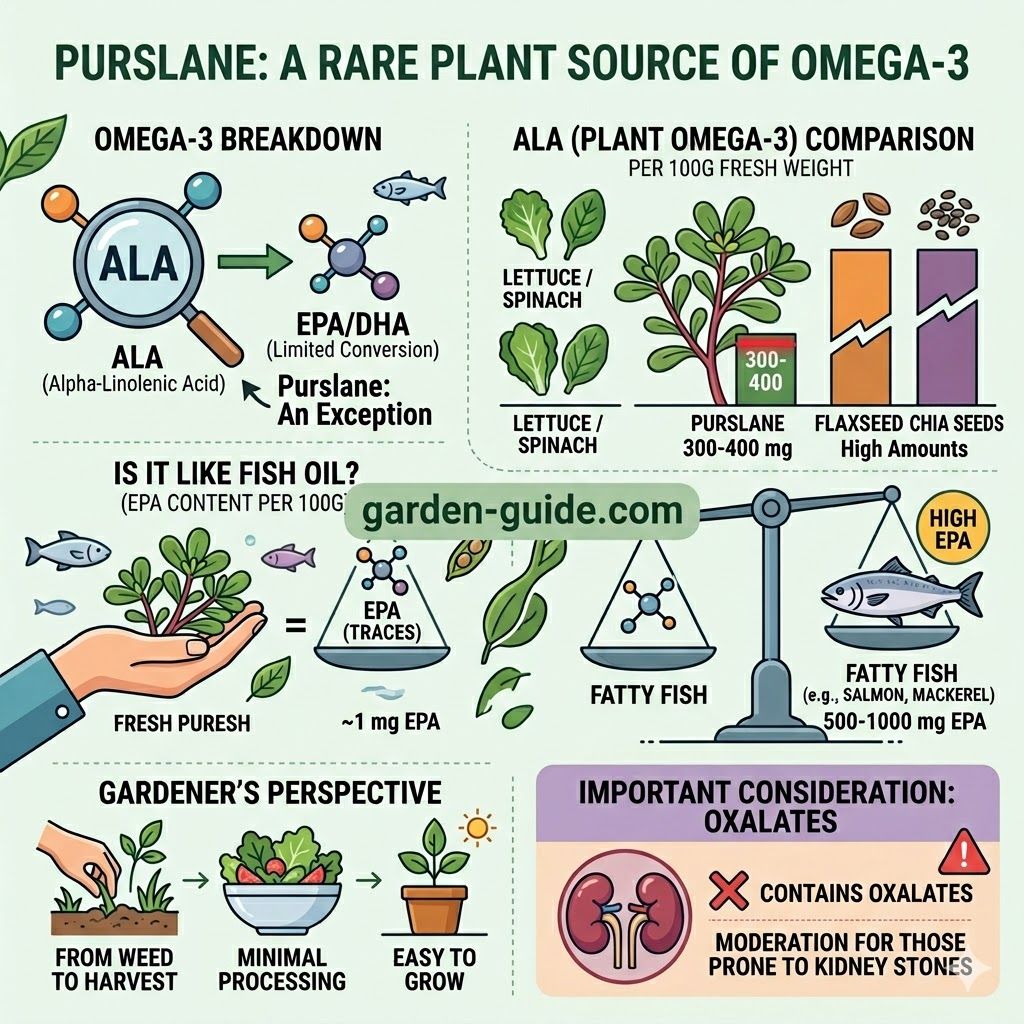
Laboratory analyses show that 100 grams of fresh purslane leaves contain approximately 300–400 mg of alpha-linolenic acid (ALA). This range appears consistently across multiple studies, with some variation depending on growing conditions.
For comparison, many commonly consumed leafy vegetables — such as lettuce or spinach — contain only a fraction of this amount. This is why purslane is often described as unusually rich in omega-3 among green vegetables.
That said, context matters. Purslane does not compete with flaxseed or chia seeds, which contain omega-3 in completely different orders of magnitude. Its value lies in the fact that it delivers a meaningful amount as a fresh vegetable, without oils or seeds.
Does Purslane Contain “Fish-Type” Omega-3?
Interestingly, some analyses indicate that purslane contains trace amounts of EPA, which is extremely rare among terrestrial plants.
In numerical terms, published summaries suggest that purslane contains roughly 0.01 mg EPA per gram of fresh weight, or about 1 mg EPA per 100 g. By contrast, fatty marine fish operate on an entirely different scale: salmon and mackerel typically provide tens to hundreds of milligrams of EPA per 100 g, with farmed Atlantic salmon reported at around ~620 mg EPA per 100 g.
Put simply, while 100 g of fresh purslane contains only a few milligrams of EPA at most, the same amount of salmon or mackerel may deliver 500–1000 mg of EPA. Purslane is therefore not a substitute for fish, but a rare botanical exception where EPA can be detected at all.
What Does This Mean for the Home Gardener?
A serving of fresh purslane salad will not replace fish oil or omega-3 supplements. However, it does offer something unusual:
- a measurable amount of omega-3 from a leafy vegetable,
- a plant that can be eaten fresh with minimal processing and
- a species many gardeners have traditionally pulled out as a weed.
Purslane also shows a relatively favorable omega-6 to omega-3 ratio compared to many other plant foods, which is nutritionally relevant.
What Is Often Left Out
Purslane contains oxalates, so people prone to kidney stones should avoid consuming it in large quantities on a regular basis. As with many nutrient-dense plants, moderation matters.
Omega-3 levels can also vary depending on plant age, growing conditions, and whether the leaves are consumed fresh or cooked.
Not a Miracle — But a Rare Exception
Purslane is not a medicinal plant or a dietary supplement. What makes it noteworthy is that it represents a rare case of an easily grown, widely available green plant that provides a meaningful amount of omega-3 fatty acids.
This alone does not transform a diet — but in a home garden, discoveries like this are a good reminder that some of the most overlooked plants deserve a second look.
In the case of purslane, the numbers are not folklore but measurements. And that is reason enough to reconsider its place — both in the garden and on the plate.
Referenced studies and sources
- Simopoulos, A. P., & Salem, N. (1986). Purslane: A terrestrial plant source of omega-3 fatty acids. New England Journal of Medicine, 315(13), 833.
- Simopoulos, A. P. (2004). Omega-3 fatty acids and antioxidants in edible wild plants. Biological Research, 37(2), 263–277.
- Uddin, M. K., Juraimi, A. S., Hossain, M. S., Nahar, M. A., Ali, M. E., & Rahman, M. M. (2014). Purslane weed (Portulaca oleracea): A prospective plant source of nutrition, omega-3 fatty acids, and antioxidants. The Scientific World Journal.
- Omara-Alwala, T. R., Mebrahtu, T., Prior, D. E., & Ezekwe, M. O. (1991). Omega-3 fatty acids in purslane (Portulaca oleracea) tissues. Journal of the American Oil Chemists’ Society, 68, 198–199.
- Petropoulos, S. A., Karkanis, A., Martins, N., & Ferreira, I. C. F. R. (2016). Phytochemical composition and health effects of purslane. Trends in Food Science & Technology, 48, 46–55.