

An apricot tree in bloom always feels a little too optimistic for its own good. The first warm spell arrives, the branches burst into soft white and pink blossom, and suddenly every home gardener is already picturing summer fruit, sticky fingers, and jars of homemade jam lined up on a shelf. Then the forecast changes. A cold night sneaks in, and all that spring confidence starts to look a bit fragile.
That is the problem with apricots: they are among the earliest fruit trees to wake up, and that early enthusiasm is both their charm and their weakness. While other trees are still thinking about the season ahead, apricots are already fully committed. Unfortunately, that often puts them straight in the path of a late frost.
Why late frost matters so much
Apricot trees are not delicate in every season. In winter dormancy, they can handle cold far better than many gardeners assume. The real trouble begins once buds swell, flowers open, and tiny fruitlets start to form. At that stage, a drop in temperature can damage the parts of the tree that matter most for this year’s harvest.
The tree itself may survive just fine. It may leaf out beautifully and look perfectly healthy a few weeks later. But the crop can still be badly reduced. That is why a tree can seem vigorous in spring and still give you almost nothing to pick in summer.
Not every chilly night is a disaster
Gardeners tend to panic the moment the temperature dips, but not every cool evening leads to serious damage. Cloudy or breezy nights are often less dangerous than clear, still ones. The real villains are calm, cloudless nights when heat escapes quickly from the ground and cold air settles low across the garden.
That is when blossom becomes vulnerable, especially in spots where cold air pools. A tree planted in a low pocket of the garden may suffer much more than one growing a little higher up, even if the two are only a short distance apart. In spring, a few metres can make an annoyingly large difference.
What can a home gardener realistically do?
This is where optimism needs to be paired with realism. A fully grown apricot tree is not something you can protect as easily as a tray of seedlings or a patio pot. There is no magic fix. Still, there are sensible steps that can improve your odds, especially with younger trees.
Covering helps, but mostly with smaller trees
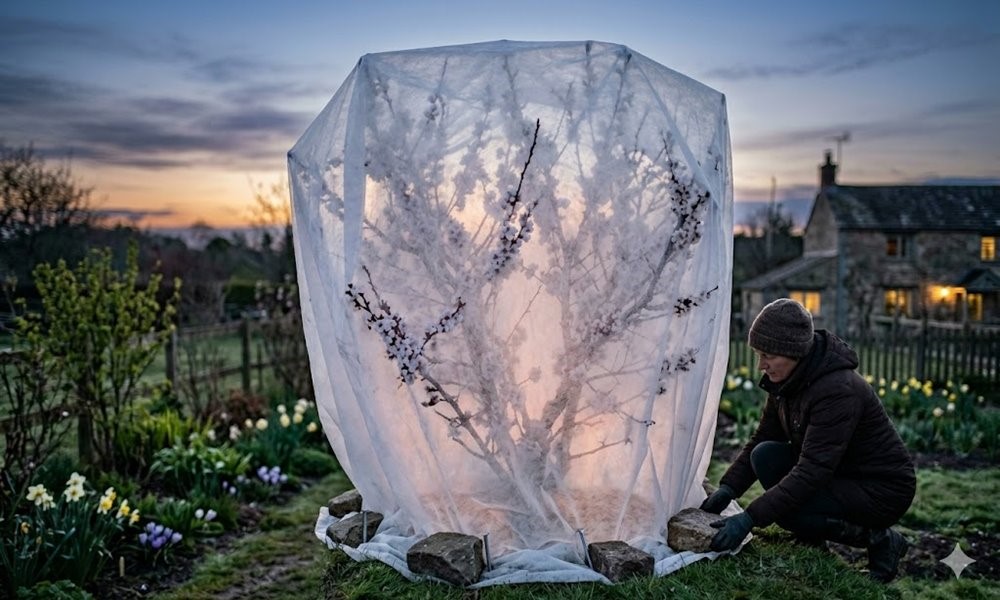
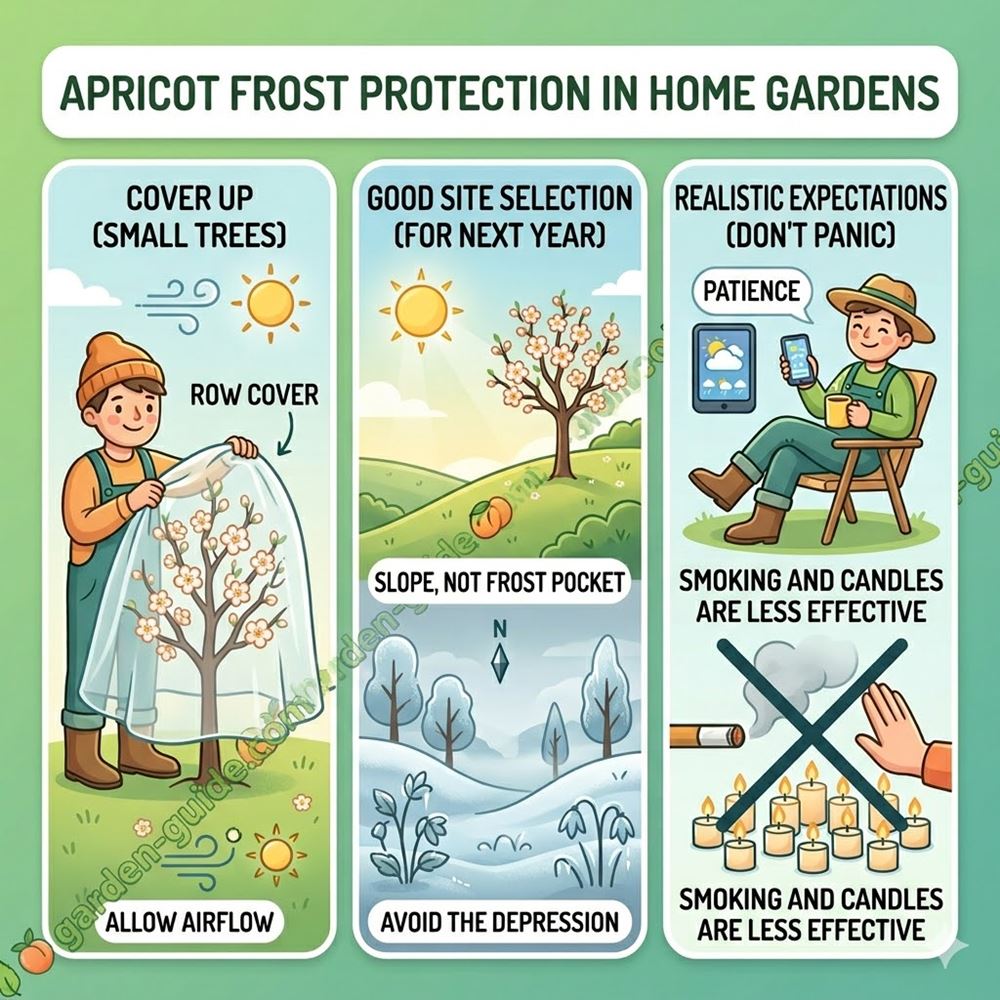
If your apricot is still young or compact enough to reach easily, a layer of horticultural fleece or another lightweight covering can provide a little extra protection during a cold night. The idea is not to wrap the tree tightly like a parcel. You are simply trying to reduce heat loss and soften the temperature drop around the blossom.
The cover should be light, breathable, and removed once conditions improve. A flowering tree wants protection, not a sweaty spring sauna.
Site choice matters more than heroic last-minute action
A well-placed apricot tree has a better chance from the start. Cold air flows downhill and settles in low-lying areas, so trees planted in frost pockets are always at greater risk. A site with good air movement and fewer cold-air traps can make a noticeable difference over the years.
This is not much comfort when the tree is already in flower, of course, but it is one of the most important lessons for anyone planning to plant another apricot in future. Sometimes the biggest frost decision is made years before the frost itself arrives.
Do not expect fertiliser, water or panic to save the blossom
When a cold snap is on the way, it is tempting to do something, anything, just to feel useful. Gardeners are very resourceful when under emotional pressure. But a last-minute feed will not make blossom frost-proof, and overdoing nitrogen can cause more problems than it solves.
The same goes for frantic interventions that sound comforting but change very little. In many gardens, the emergency response mostly soothes the gardener rather than protecting the tree.
Be cautious with folk remedies and dramatic frost rituals
Every spring brings stories of smoke, candles, improvised heaters and all manner of dawn garden rescue missions. In commercial orchards, frost protection can involve carefully managed systems and specific conditions. In an ordinary backyard, results are usually much more limited.
That does not mean every idea is useless. It means expectations should stay realistic. A single bucket of smoke and good intentions rarely win an argument with the weather.
How will you know if the blossom survived?
This is one of the more frustrating parts, because frost damage is not always obvious straight away. Blossoms can look surprisingly normal at first, even when the central parts have already been injured. A few days later, the picture becomes clearer. Healthy flowers move forward; damaged ones drop away.
If plenty of small fruitlets remain and begin to swell, you can allow yourself a little cautious hope. If the tree flowers well and then sets almost nothing, late frost was probably part of the story.
Apricots are not the only ones at risk, but they are often first in line
Many early-flowering stone fruits face the same problem, yet apricots have a special talent for getting ahead of themselves. That is why they so often become the symbol of spring gardening heartbreak. They bloom early, they charm everyone, and they leave themselves exposed.
And yet gardeners keep planting them. For good reason. In a favourable year, an apricot tree is one of the great pleasures of a home garden. It asks us to gamble a little on spring, and sometimes that gamble pays off beautifully.
What to take from all this
Protecting apricot blossom is not about controlling every detail. It is about understanding risk, working with the conditions you have, and focusing on what genuinely helps. Smaller trees can be covered. Better sites can be chosen. Frost pockets can be avoided. Expectations can be kept just realistic enough to preserve your sanity.
And yes, sometimes one cold night still changes everything. That does not mean you failed. It simply means gardening remains what it has always been: part knowledge, part patience, part weather, and part hope.
Perhaps that is exactly why apricots are so beloved. They bloom like summer is already on the way, long before the season has actually made any promises.