
Some calendar days belong to more than one story at once. March 12 is one of them. In older Hungarian tradition, Gregory’s Day stood at the uneasy threshold of spring, once linked in the Julian calendar with the season’s turning point. It carried that familiar early-spring tension: warmth in hope, cold still waiting just beyond the hedge.
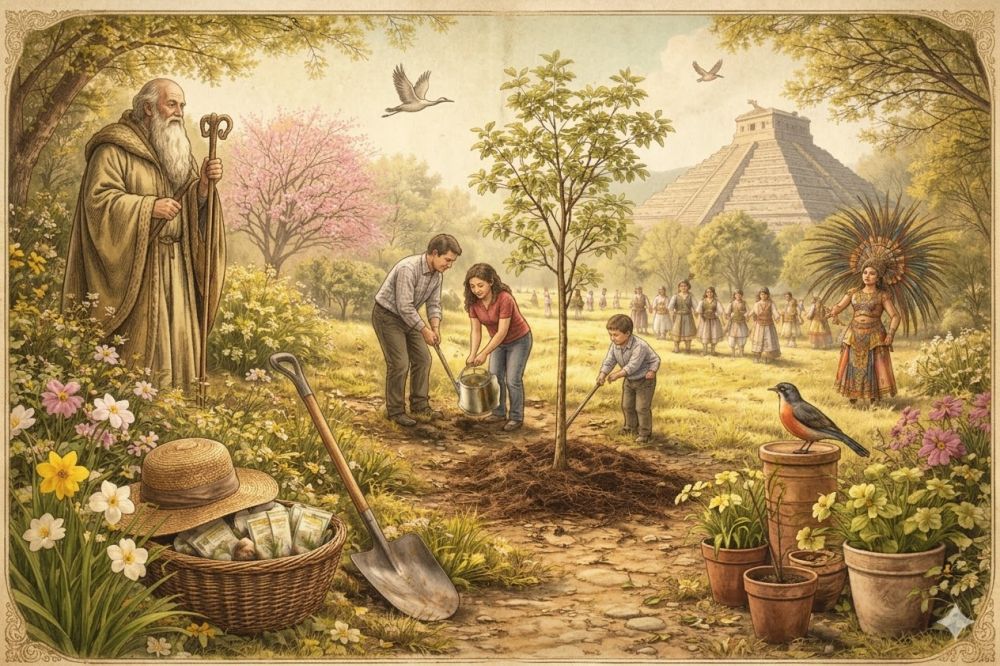
But this date can also be read more widely. In different parts of the world, March 12 has been associated with national commemorations, religious observances, and even tree-centred celebrations such as Arbor Day in China and Taiwan. That broader perspective gives the day an especially fitting place in a garden almanac: it becomes not just a village marker of shifting weather, but part of a global season of attention to renewal, learning, public life and the living landscape.
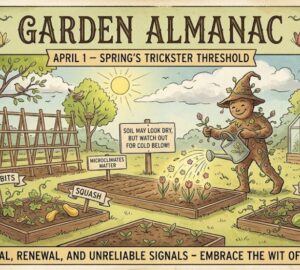
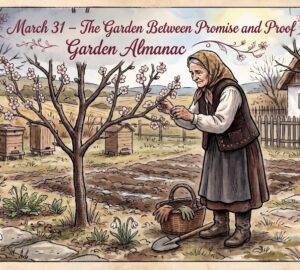
When spring begins, but does not settle
In Hungarian folk observation, Gregory could still “shake his beard” and send back snow just when birds had begun nesting and the land looked ready to wake. It is such a memorable image because it captures a truth gardeners everywhere know: early spring is rarely a straight line. It advances, hesitates, softens, then startles us again.
One of the most vivid examples tied to this day is the lapwing. If the birds were already on their nests by Gregory’s Day, a return of snow could threaten what had only just begun. That old rural image still feels surprisingly modern in any climate where buds swell too early, seedlings leap ahead, or fruit trees respond to warmth that may not yet be trustworthy.
Traditional weather lore also treated storms on Gregory’s Day as a warning of unsettled conditions ahead. Whether taken literally or not, such sayings reveal close ecological attention. People watched sky, soil, birds and field as parts of one conversation. Spring was not declared by the date alone. It had to prove itself.
A day of sowing, and of civic meaning
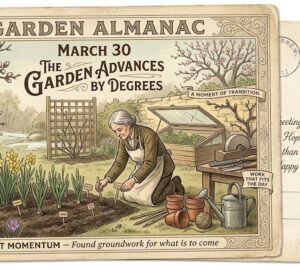
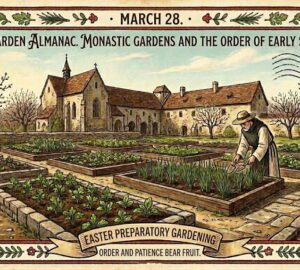
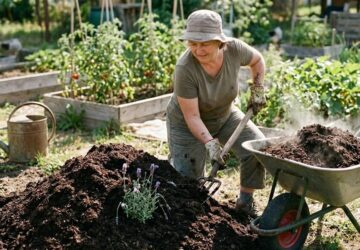
Gregory’s Day was often regarded as favourable for sowing. Grain, legumes and seeds meant for transplanting could be started, and in some places onion seed was sown around this time. The message was simple: the season of waiting was giving way to the season of work.
Yet the customs around the day show that this beginning was handled with care. Rules, taboos and seemingly strange prohibitions gathered around sowing because first actions mattered. To begin badly was to risk the crop. To begin attentively was to acknowledge that nature responds not only to effort, but to timing.
Seen internationally, that sense of responsibility gives March 12 another layer. A day linked elsewhere to Arbor Day observances and public commemorations becomes more than a local marker of weather. It suggests the shared human instinct to pause in early spring and ask how we will treat the land, what we will plant, and what kind of year we hope to grow into.
Gregory-walking and the season of return
Another beautiful layer of the Hungarian day was gergelyjárás, the Gregory-walking custom. Groups of children in ribbon-trimmed hats went from house to house singing and collecting gifts for the teacher or school. It was festive, musical and communal, but also practical: a springtime ritual tied to education, support and the reawakening of village life.
That matters in an almanac because it reminds us that spring never belongs only to the field or the garden bed. It belongs to streets, schools, households and public squares too. Across cultures, this time of year often gathers together planting, ceremony, learning and community. March 12 feels especially rich because it carries all of that at once.
What the garden still hears in this day
On this day, Gregory stands not as the bringer of secure spring, but as a figure of beginnings that remain unfinished. The soil is loosening. Birds are moving. Seeds can be started. But caution still belongs beside hope.
That may be why this date feels so alive even now. Read locally, it is a day of weather wisdom, sowing customs and children’s songs. Read more globally, it becomes part of a much larger human pattern: early spring as a moment when people look outward to the season and inward to their responsibilities. Gardens, after all, are never only about plants. They are also about timing, memory, patience and the ways communities imagine renewal.