
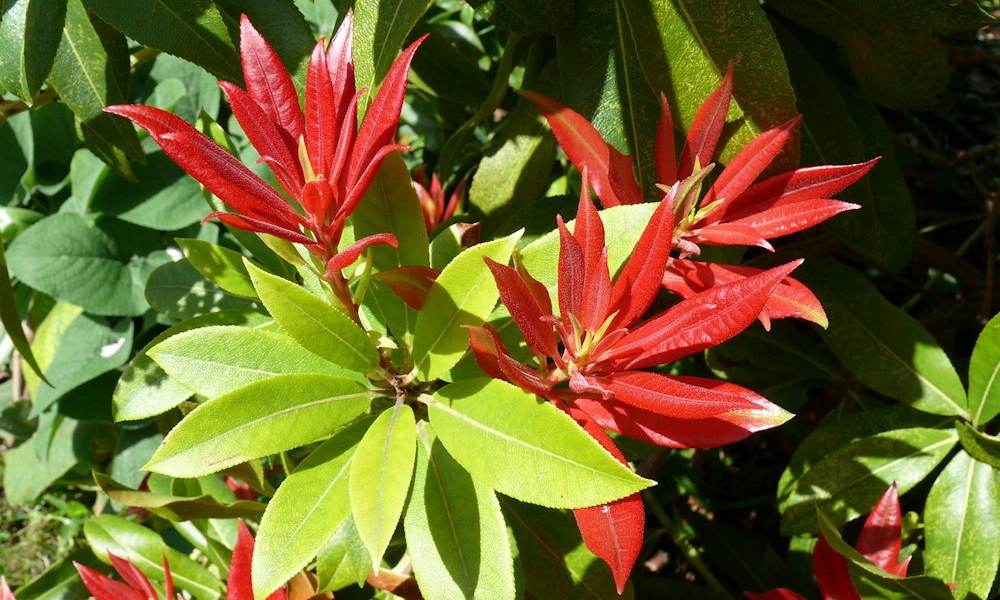

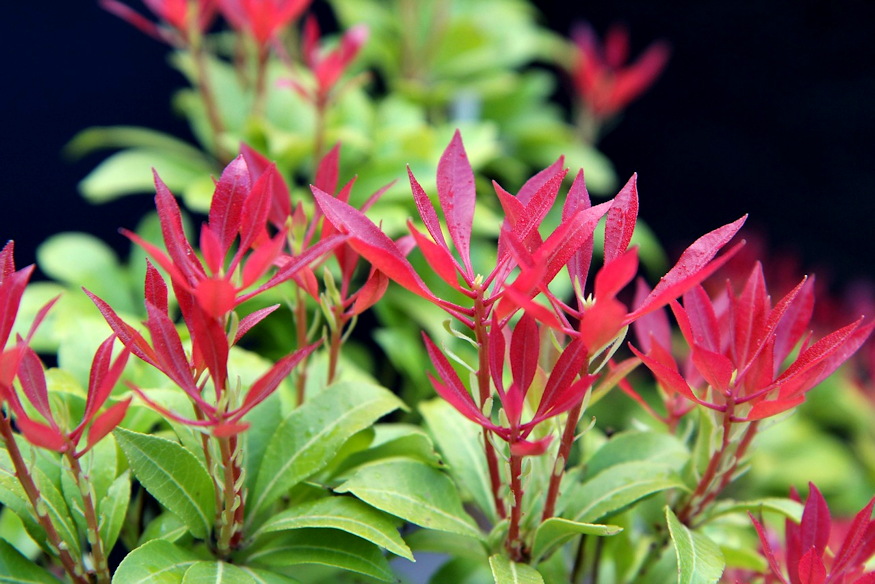
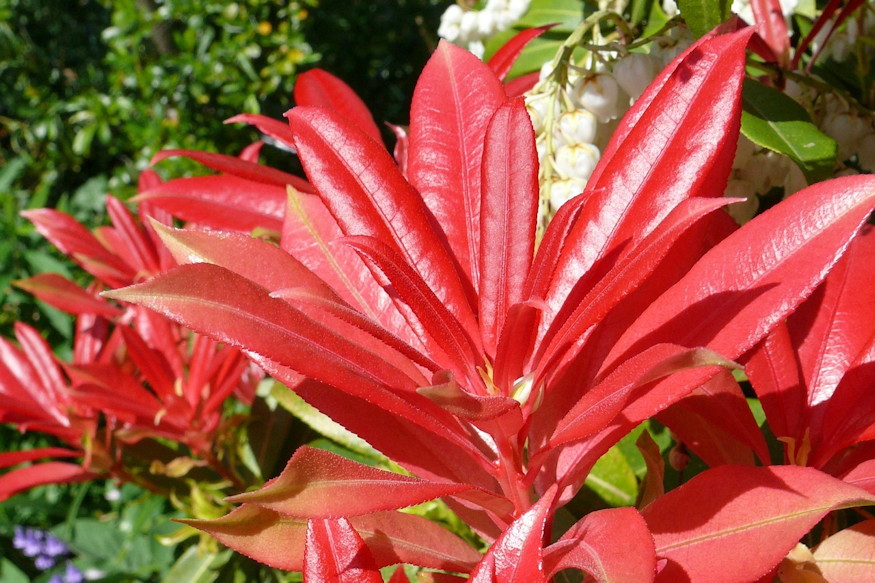
Some shrubs quietly blend into the background. Japanese andromeda does not. In spring, its fresh new growth often emerges in vivid shades of red, creating the impression that part of the garden has briefly caught fire – a harmless and highly decorative illusion that varies by cultivar.
Native to Forested Mountains
Pieris japonica is native to the cool, humid woodlands of Japan, China and Taiwan. It naturally grows as an understory shrub in acidic soils, protected by taller trees. These origins explain its preference for partial shade, moisture-retentive soil and stable growing conditions.
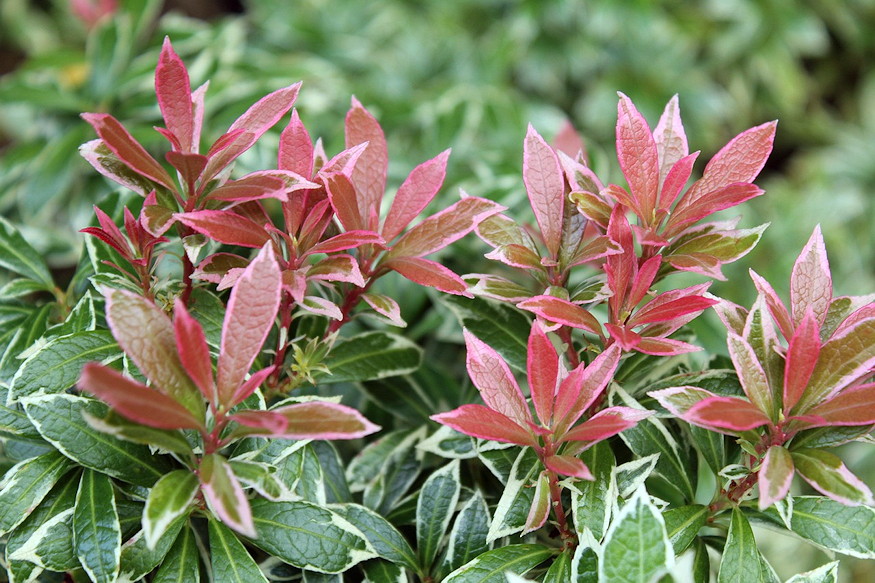
Different cultivated varieties emphasise these traits in different ways: some hold their red foliage longer, others transition more quickly into calm, deep green tones.
A Brief Botanical History
The species reached Europe in the 19th century, quickly gaining popularity in botanical gardens and refined ornamental landscapes. The genus name Pieris refers to Pieros, father of the Muses in Greek mythology – an unusually poetic reference that hints at the plant’s long-standing aesthetic appeal.
Modern garden design values Japanese andromeda for its ability to combine evergreen structure with seasonal visual change.
Relatives and Garden Companions
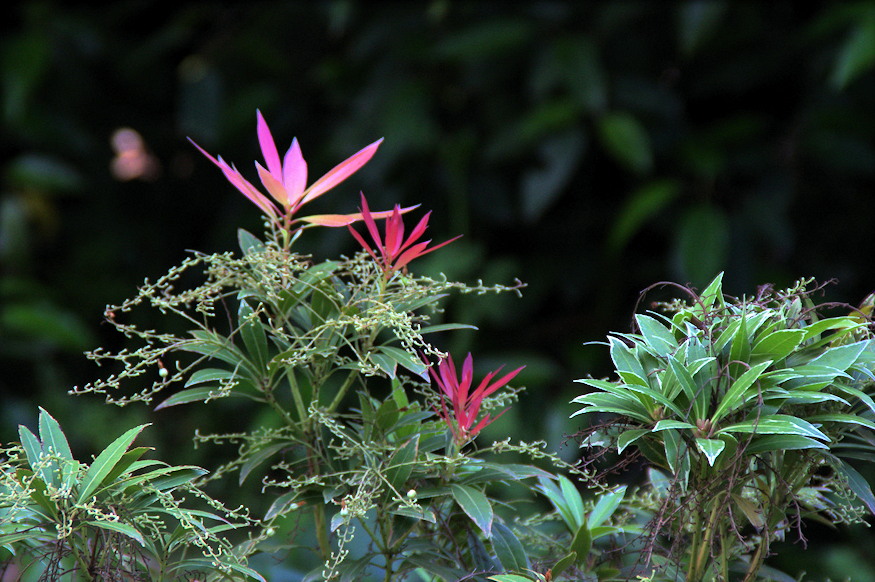
Pieris belongs to the heath family (Ericaceae) and shares close ties with rhododendrons, azaleas, heathers and blueberries. Their similar soil requirements make them natural companions in acid-loving garden beds, where they perform best as part of a cohesive planting.
Care Requirements – Simple, but Specific
Japanese andromeda thrives in acidic soil. When this key condition is met, it becomes a reliable, slow-growing evergreen shrub with excellent longevity. It prefers partial shade but tolerates brighter locations if protected from harsh midday sun.
Consistent moisture is essential, though waterlogged soil should be avoided. Mulching helps maintain soil acidity, moisture balance and root protection.
Flowering and Pruning
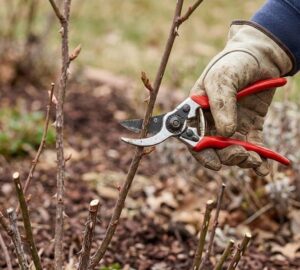
In spring, the plant produces clusters of small, bell-shaped white flowers with a subtle fragrance that attracts early pollinators. Pruning is minimal and best limited to removing spent flower clusters, encouraging healthy new growth without disturbing the plant’s natural form.
Propagation – For the Patient Gardener
Propagation is usually done by semi-hardwood cuttings taken in summer. Results require patience, but successful cuttings develop into robust young plants. Seed propagation is possible, though mainly of interest to collectors and botanical enthusiasts.
Who Is Japanese Andromeda For?
Japanese andromeda is best suited to gardeners who are willing to prepare the right conditions and accept that not every plant thrives in average garden soil. It performs best in partially shaded areas with acidic ground, especially alongside other members of the heath family.
It is not an ideal choice for those seeking fast growth or a completely maintenance-free shrub. However, for gardeners who appreciate subtle seasonal shifts, evergreen structure and plants that reward consistency rather than force, Pieris japonica is a quietly dependable companion.