

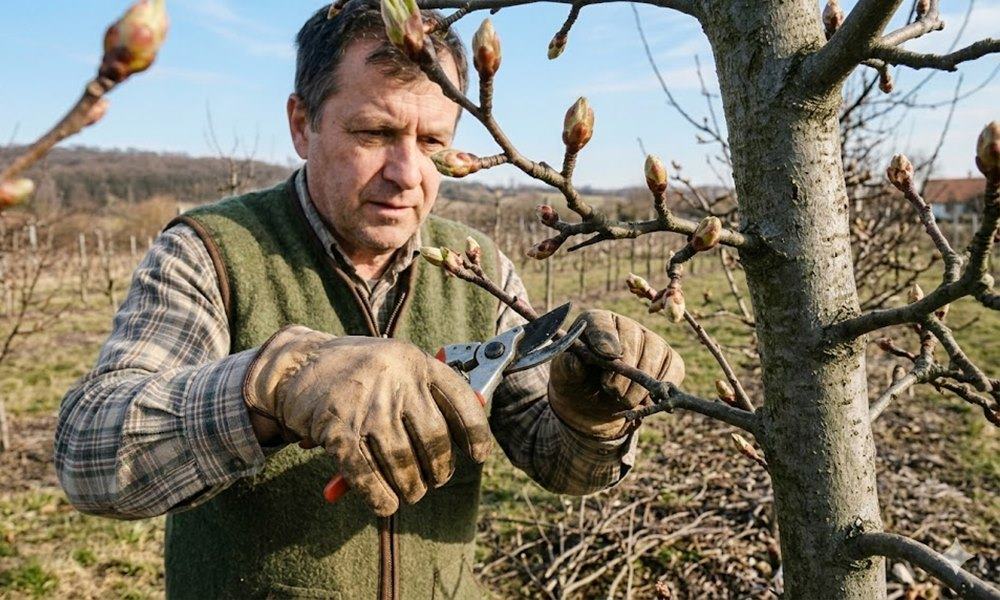

Early March often determines whether promise turns into harvest. Buds swell, sap begins to move, and each pruning cut influences how a tree allocates energy in the coming months. This is a corrective window — but no longer a consequence-free one. Pruning now is not structural revolution. It is calibration within a living, reactivating system.
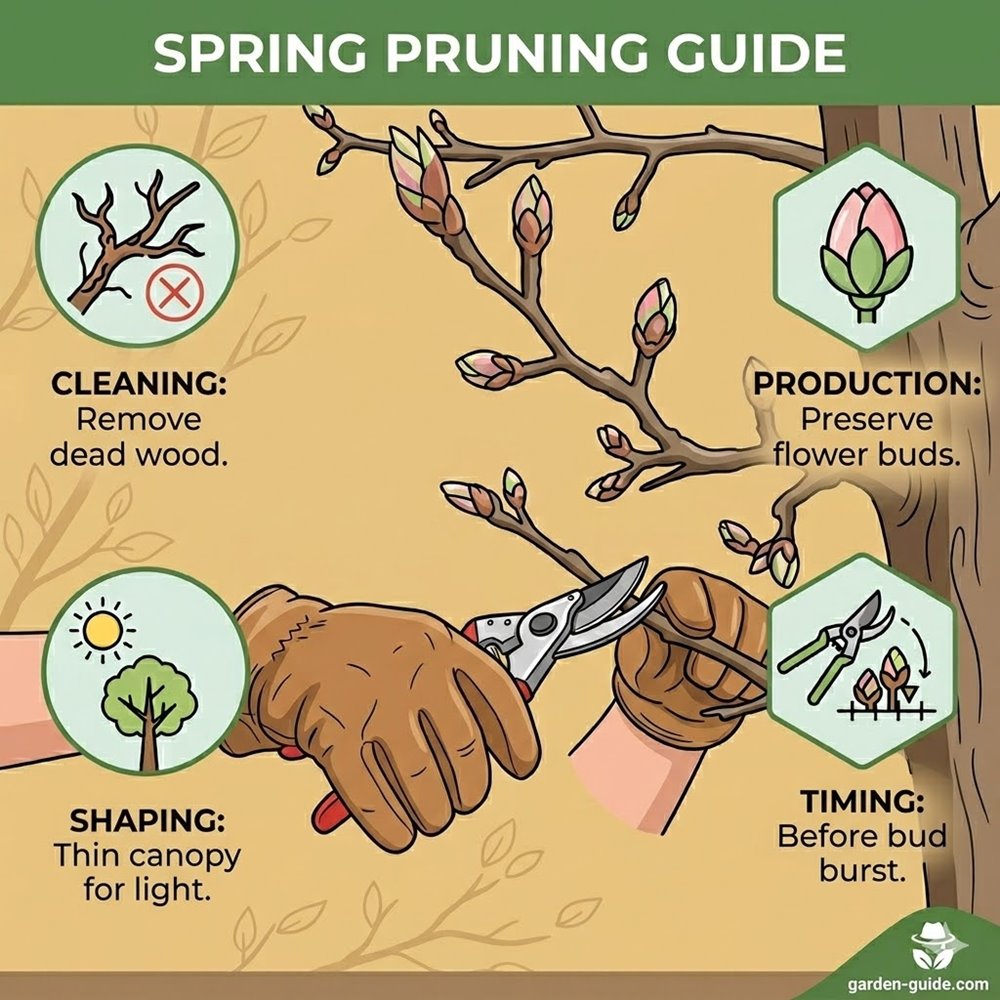
Pome Fruits – Completing Winter Work
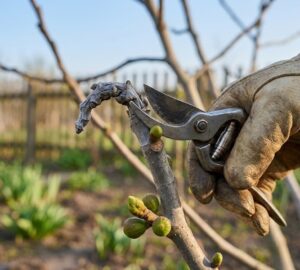
Apple, pear, quince, and medlar tolerate late-winter pruning relatively well. If buds remain swollen but unopened, corrective and finishing cuts can still be made safely. The emphasis shifts toward canopy balance: improving light penetration, removing inward-growing branches, and rejuvenating aging fruiting wood. This stage calls for refinement, not reconstruction.
Mild sap bleeding at cut surfaces signals metabolic activation. While healing may accelerate, excessive reduction can stimulate vigorous vegetative response.
Stone Fruits – A More Sensitive Phase
Peach, apricot, cherry, plum, and sour cherry require greater caution. They respond quickly to warming temperatures and are more vulnerable to infection through fresh pruning wounds. If apricot is already flowering, intervention should remain minimal. Extensive early cuts in cherries during cool, humid weather may increase bacterial disease risk. Restraint is often the wiser professional choice.
When Is Pruning Considered Late?
Pruning becomes late not by calendar date but by developmental stage. Green-tip buds, active shoot elongation, and evident sap flow indicate physiological transition. At this stage, pruning stimulates vegetative growth more strongly. The tree reacts with shoots rather than fruiting balance. Nevertheless, moderate corrections remain possible. Fruit trees are resilient organisms.
Interpreting Sap Flow
Visible sap at pruning wounds and intensified bud swelling reveal resumed internal transport processes. Active sap flow accelerates wound closure but amplifies growth response. Early-March pruning should therefore prioritize structural balance and light optimization rather than aggressive reshaping.
Strategic Perspective
Effective early-spring pruning is subtle. It improves air circulation and light distribution without provoking excessive vegetative reaction.
In March, pruning shears function less as tools of transformation and more as instruments of calibration — aligning tree architecture with the season’s emerging momentum.