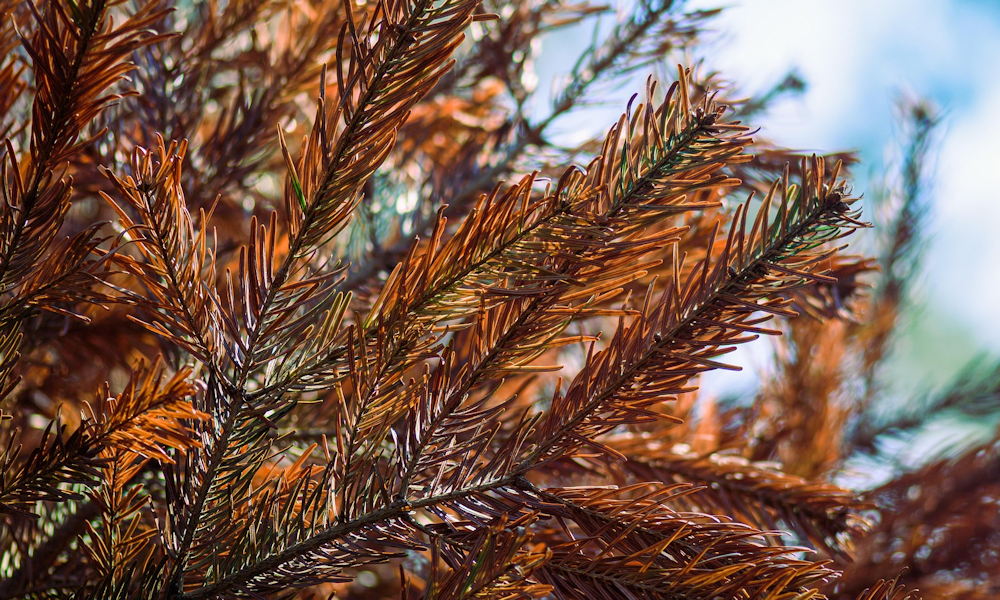

We expect evergreens to live up to their name, especially in winter. When thuja, cherry laurel or pines begin to turn brown, concern quickly follows. Yet winter browning is not always a sign of trouble – in many cases, it is a perfectly understandable plant response.
Winter Is Stress, Not Rest
Evergreens do not truly shut down in winter. Their needles and leaves continue to lose moisture, even when frozen soil prevents roots from absorbing water. This winter desiccation is one of the most common causes of browning.
Cold alone is rarely the issue – imbalance in water supply is.
Sun and Wind: A Hidden Combination
Bright, windy winter days can be surprisingly damaging. Sunlight warms foliage and increases transpiration, while roots remain locked in frozen ground. As a result, browning often appears on the south or southwest-facing sides of plants.
Young plants and newly planted hedges are particularly vulnerable.
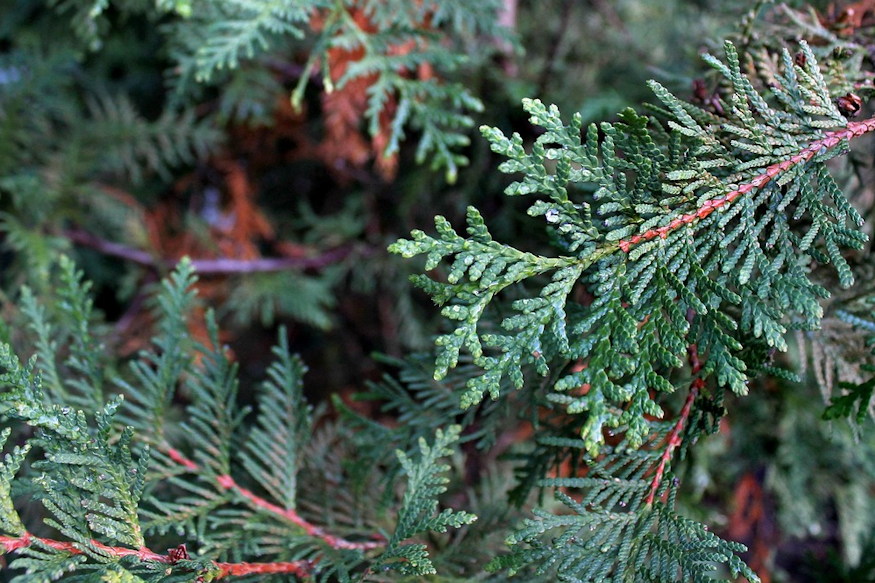
Not All Browning Is the Same
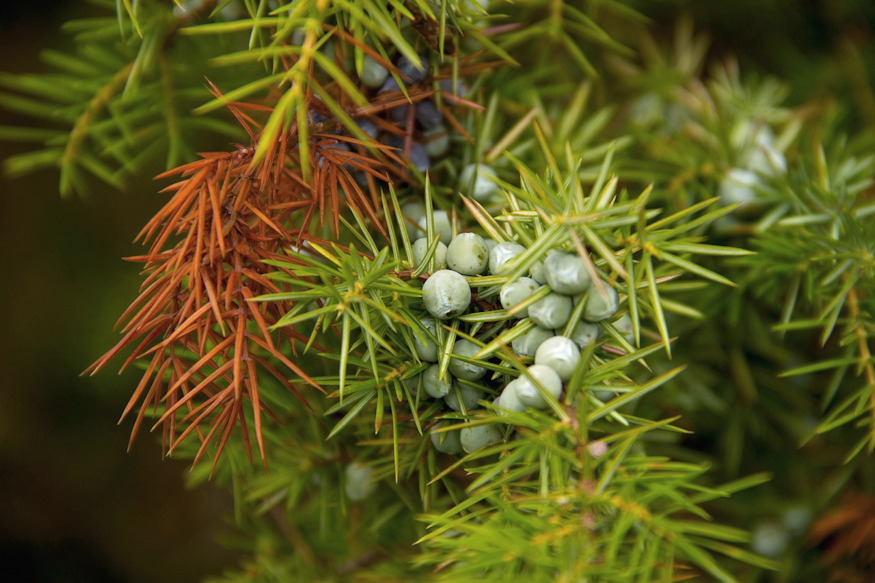
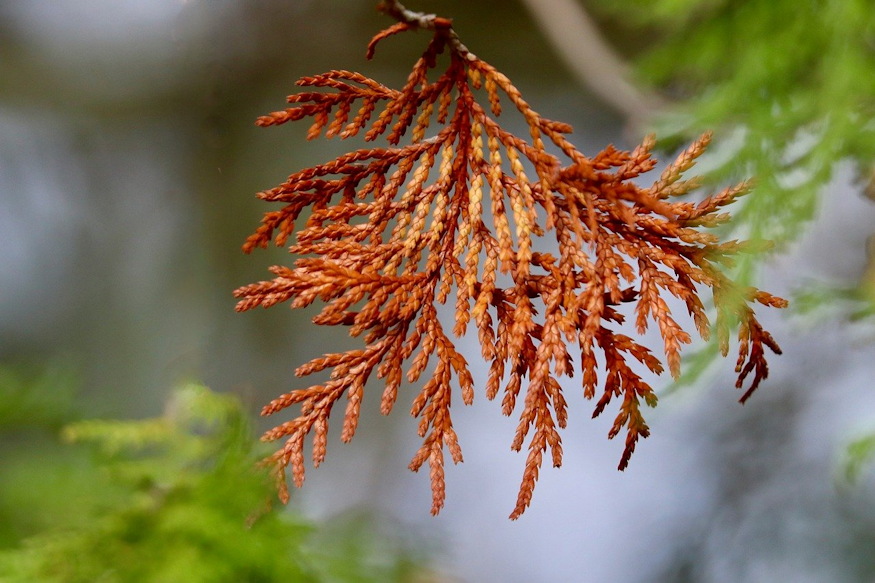
Some evergreens naturally shed older inner needles during winter. This process usually starts from the inside and works outward, resolving on its own in spring.
Patchy browning, damaged shoot tips or entire branch sections, however, may indicate stress that deserves closer attention.
Soil Still Matters in Winter
Poorly drained, compacted soils cause problems even when plants appear dormant. Excess moisture that freezes around roots can damage fine root systems, with symptoms only becoming visible weeks later.
This delayed effect explains why winter damage often seems to appear suddenly in spring.
When Evergreens Stay Green
Well-established plants growing in suitable soil and sheltered locations are far less likely to brown. Wind protection, proper autumn watering and thoughtful plant selection all reduce winter stress.
Staying green is not luck – it is the result of good conditions.
Common Misconceptions
Winter browning is rarely caused by fungal disease. Another widespread myth is that frost “burns” foliage. In reality, water stress and environmental exposure are far more common causes.
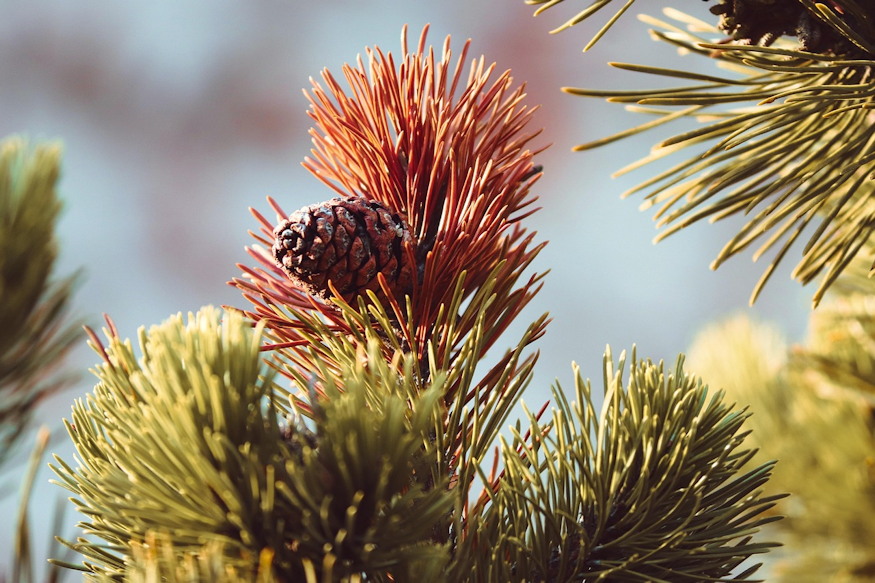
Winter Teaches You to Read the Garden
The winter appearance of evergreens reveals much about soil quality, exposure and overall garden health.
Next, we will explore what can be done in autumn and winter to ensure evergreens emerge green and healthy when spring arrives.